Recent

Welcome to Bit2Me Academy!
Here you will find a lot of articles with which you will learn the main concepts of the crypto world.

Crypto Year 2026 Summary: Milestones, Regulation, and What to Watch in 2027
Medium

Crypto Year 2026 Summary: Milestones, Regulation, and What to Watch in 2027

We review the regulatory milestones of the crypto year 2026, the MiCA framework for exchanges, and the key structural lines that will mark cryptocurrencies in 2027.
Bit2Me José Maldonado November 12, 2026
Accumulation or distribution ETFs: which to choose
Medium

Accumulation or distribution ETFs: which to choose

Accumulation or distribution ETFs: compare the tax treatment of their dividends in Spain and find out which one to choose for your own investment strategy.

Bit2Me José Maldonado November 11, 2026
Exchange vs wallet: differences and when to use each one

Exchange vs wallet: differences and when to use each one

Discover the difference between an exchange and a wallet, when to use each one, and how to combine them to securely buy and store your crypto assets.

Bit2Me November 7, 2026
Bitcoin vs Ethereum: Key Differences Explained
Medium

Bitcoin vs Ethereum: Key Differences Explained

Bitcoin vs Ethereum: A clear comparison of purpose, consensus, monetary policy, and use cases to understand how they truly differ.

Bit2Me José Maldonado November 1, 2026
What is slashing and how does a regulated CASP protect you?
Medium

What is slashing and how does a regulated CASP protect you?

What is slashing in staking, why does it penalize validators, and how does a CASP regulated under MiCA reduce the risk of operational errors that cause it?

Bit2Me José Maldonado October 31, 2026
Institutional staking and nodes: infrastructure for businesses
Medium

Institutional staking and nodes: infrastructure for businesses

Institutional staking for companies: HSM/MPC infrastructure, slashing risk and CASP authorization under MiCA to decide to outsource or manage nodes.

Bit2Me José Maldonado October 30, 2026
How to protect your cryptocurrencies: a personal security guide
Basic

How to protect your cryptocurrencies: a personal security guide

A practical guide to protecting your cryptocurrencies: seed phrase, 2FA, phishing, public Wi-Fi, and hardware wallets. Strengthen your security today.

Bit2Me José Maldonado October 29, 2026
Spot trading vs advanced trading: when to make the leap to Pro
Medium

Spot trading vs advanced trading: when to make the leap to Pro

Spot trading vs advanced trading: differences, real risks of leverage and when it makes sense to make the leap to professional tools.

Bit2Me José Maldonado October 28, 2026
What is KYC and why does a regulated exchange require it?
Basic

What is KYC and why does a regulated exchange require it?

Discover what KYC is, why every exchange regulated under MiCA requires it, and what documents you need to complete your own identity verification.

Bit2Me José Maldonado October 27, 2026
Institutional custody of crypto assets: what to demand from your provider
Basic

Institutional custody of crypto assets: what to demand from your provider

What a company should demand from its institutional cryptocurrency custody provider: asset segregation, MiCA/CASP, audits, and key governance.

Bit2Me José Maldonado October 26, 2026
Best crypto card in Spain: what to look for before choosing one
Basic

Best crypto card in Spain: what to look for before choosing one

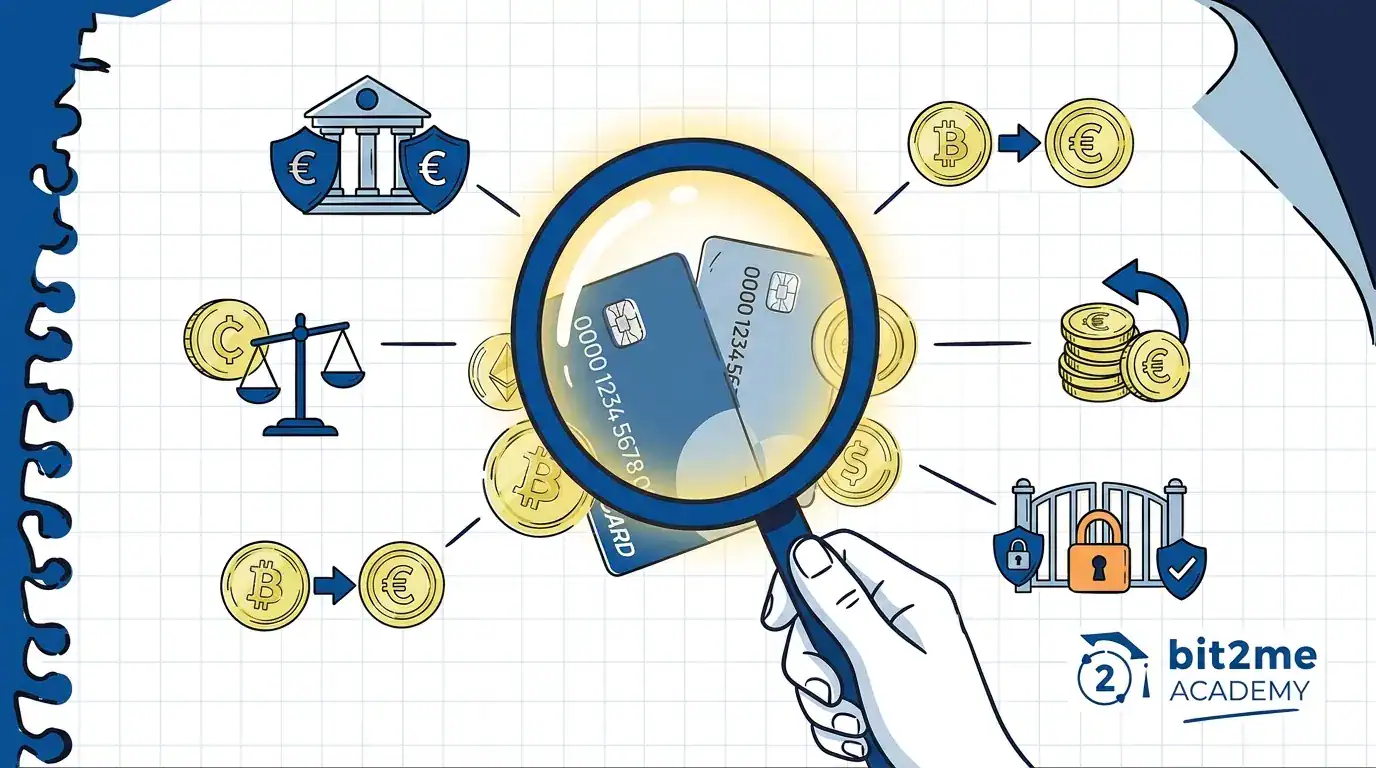
What to look for when choosing a crypto card in Spain: regulated issuer, conversion, fees, cashback, limits and security, without comparing brands or rankings.

Bit2Me José Maldonado September 7, 2026
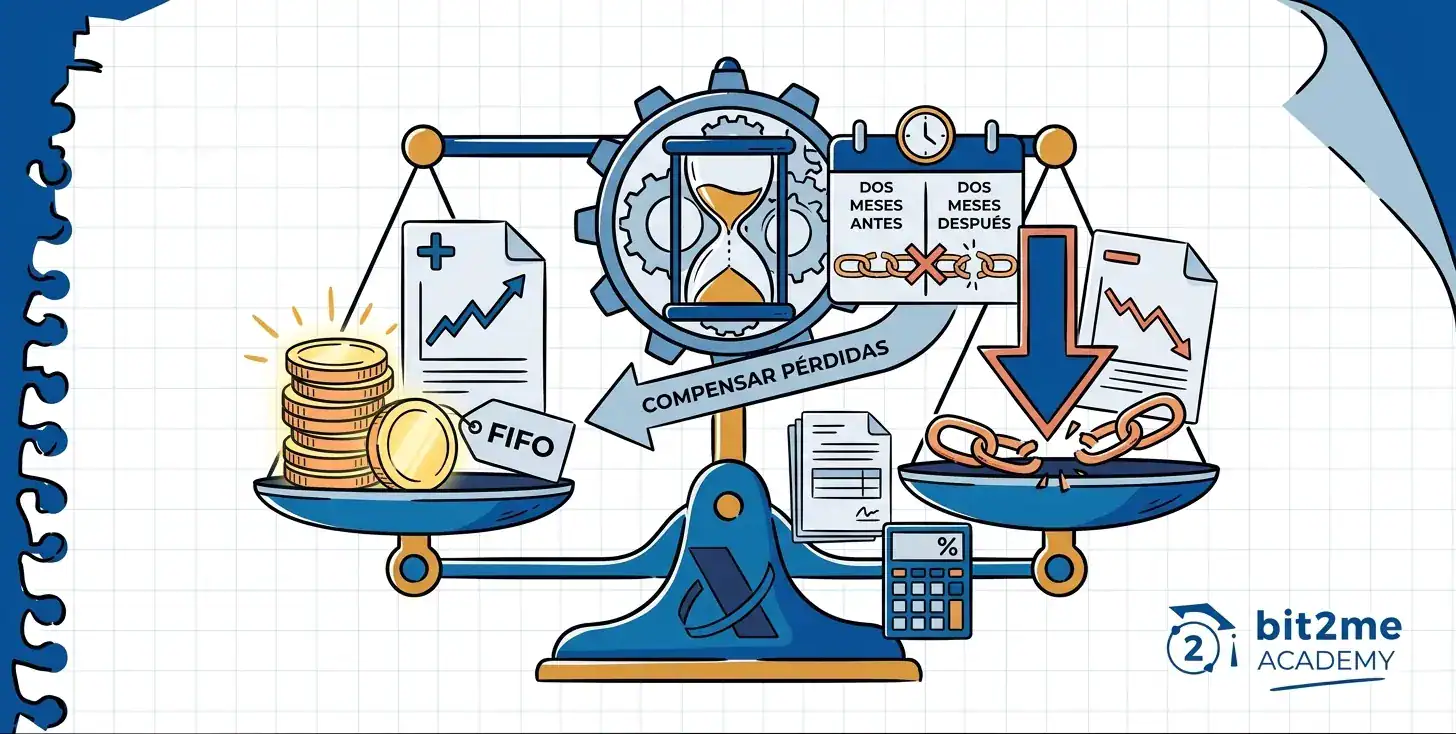
Taxation of shares in Spain: taxation and the two-month rule
Basic

Taxation of shares in Spain: taxation and the two-month rule

Taxation of shares in Spain: savings base, personal income tax brackets and the two-month rule (art. 33.5 LIRPF) explained step by step, with examples.

Bit2Me José Maldonado September 7, 2026

We want to help you

FAQ

Top Resolved Questions About the Ethereum and ETH Ecosystem

Ethereum is a decentralized blockchain with the ability to manage smart contracts. It was created in 2015 by the programmer Vitalik Buterin and its main objective is to allow the creation and execution of decentralized applications, which makes it much more than just a cryptocurrency. Your doubts expanded in this article, if you want to learn more we recommend the free ethereum 101 course.

Ethereum [ETH] It is backed by blockchain technology, a decentralized database that records all network transactions. The security of the network is guaranteed through the use of cryptography and a consensus system that guarantees that the information stored in the blockchain is immutable.

The main network of Ethereum is the Ethereum Mainnet, which is the network on which most transactions take place and smart contracts are executed.

Ethereum offers the possibility to create decentralized applications through the use of smart contracts. It also allows the creation of custom tokens, thanks to the introduction of a token standard that allows projects to create tokens very easily. Ethereum also allows the execution of secure and fast transactions around the world. You can trade Ethereum from our portal and see the price in real time as well as evolutionary graphs.

You can get ethereum through exchanges, as a reward for validating transactions or receiving payments in this cryptocurrency. Bit2MeWe offer the possibility of buying Ethereum with euros, as well as selling and converting this cryptocurrency.

Anyone with a digital wallet with Ether (Ethereum's native token) can trade with it, either directly (peer-to-peer P2P transactions) or using exchanges (decentralized or decentralized), as well as receive payments in Ether for service or product loans. In addition to operate as a business or business.

To buy or sell ethereumYou need access to an exchange or trading platform. Bit2MeWe offer a cryptocurrency buying and selling platform that allows you to buy, sell, and convert Ethereum easily and securely.

To do one ether transfer, you need to have a digital wallet with your own Ethereum address and the recipient's wallet address. Then simply enter the amount you want to transfer and confirm the transaction. It is important to ensure that the recipient address is correct to avoid errors.

No, once an Ethereum transaction is sent, it cannot be canceled or reversed. Ethereum transactions are immutableand they are recorded in the Ethereum blockchain forever. However, it is possible to send a new transaction that cancels or modifies the effects of the original transaction.

La ethereum security in a transaction is secured through the use of public and private key cryptography. Each Ethereum wallet address has a private key that only the wallet owner knows and a public key that can be shared publicly. Transactions are digitally signed with the sender's private key and can only be verified by the recipient's public key. In addition, the Ethereum network uses proof-of-work or proof-of-stake consensus to validate transactions and ensure the integrity of the blockchain.

Vitalik Buterin, founder of Ethereum, has presented a new roadmapwith the aim of re-decentralizing the network and increasing trust in it. The arrival of The Merge on Ethereum brought with it a series of centralization and censorship problems that Buterin seeks to remedy with this new plan. The roadmap consists of four phases: The Surge, The Scourge, The Verge, and The Purge, and focuses on scalability, decentralization, and simplification of the network. The last phase, The Splurge, will focus on fixing the other issues on the network. The intention is to avoid the loss of the network and all that it means by the decision of a third party.

The simplest option is buy on an exchange or broker. There are countless platforms to acquire this cryptocurrency, but in Bit2MeWe have an easy-to-use and secure platform to acquire this cryptocurrency. To begin the purchase process on this platform, simply go to the website of Bit2MeSelect the ETH card and click "Buy." A box will then appear where you can enter the amount of euros you want to buy in its cryptocurrency equivalent. This will take you to a registration process that will only take a minute to complete, along with an identity verification or KYC procedure. Once these two procedures are finished, you can complete your purchase and the money will finally be in your wallet. Bit2Me Wallet, in addition to an account Bit2Me which gives you access to all its services.

By ethereum nodemeans any computer running the software necessary to connect to the Ethereum network. Nodes connect to each other to send information back and forth, validate transactions, and store data about the state of the blockchain.

La Ethereum Foundation is a non-profit organization that aims to support the development and promotion of the Ethereum platform and blockchain technology in general. It was created in 2014 by Ethereum founder Vitalik Buterin and other leaders from the Ethereum community. The foundation funds the development of Ethereum software and funds projects that seek to expand and improve the platform. It also promotes the adoption of Ethereum in the industry and the global community through the organization of events and collaboration with companies and organizations around the world. In addition, the Ethereum Foundation works to ensure the security and scalability of the Ethereum platform, and to educate the community and developers about blockchain technology and its potential impact on society and the economy. In short, the Ethereum Foundation plays a critical role in the development, promotion, and security of the Ethereum platform and blockchain technology.

The Ethereum ecosystem continues to change constantly thanks to the implementation of improvements proposed through the Ethereum Improvement Proposals (EIPs). These documents allow the Ethereum developer community to further improve the blockchain, contributing to the evolution and growth of the Ethereum ecosystem over time. The Ethereum Foundation is responsible for dedicating resources to ensure the security and scalability of the Ethereum platform.

Ethereum is a decentralized platform for building applications and smart contracts that run on a blockchain. TO bitcoin difference Mainly focused on being a digital currency and a means of transferring value, Ethereum focuses on programming decentralized applications that can automate processes and transfer value. Ethereum also uses a Turing complete programming language, allowing for greater flexibility and complexity in building smart contracts and applications.

Smart contracts are self-executing computer programs that automate and execute agreements based on pre-defined rules and conditions. On Ethereum, smart contracts are used to create decentralized applications and ERC-20 tokens, and are a fundamental part of the platform. Bit2Me It offers services and support for the development and use of smart contracts on the Ethereum network.in addition to more consultancies for decentralized services for companies.

La Ethereum Virtual Machine (EVM) It is a virtual machine that is used to run smart contracts on the Ethereum network. It is important because it allows developers of decentralized applications (dApps) to program and run smart contracts on a secure and trusted platform.

The unit of account in Ethereum is Ether (ETH). TO unlike Bitcoin, Ethereum It does not have a maximum supply limit. Furthermore, Ethereum is focused on creating decentralized applications and smart contracts, while Bitcoin is focused on being a store of value and medium of exchange.

Smart contracts are important in the business world because they allow the automation of processes, which can reduce costs and increase efficiency. Additionally, smart contracts can improve transparency and trust in business transactions.

El gas in ethereum Gas is a unit of measurement used to quantify the amount of computational effort required to execute an operation within the network. Simply put, gas is the fee the network charges for executing a transaction. Gas is measured in GWEI (the smallest unit of Ethereum) and fluctuates based on the complexity of the required transaction, as well as the network's current usage; the greater the network congestion, the higher the fees. Bit2MeOur users can adjust the gas price for their transactions and smart contracts, as well as check gas rates in real time.

Ethereum was created by Vitalik Buterin in 2013, and was first released in 2015.

The Smart Contracts they work through the execution of code on a blockchain platform. The terms and conditions of a contract are established in the Smart Contract code, which is executed automatically when the previously established conditions are met. The execution of the contract is carried out in a decentralized network and its transparency and security are supported by cryptography.

Blockchain technology in Ethereum it works by creating a decentralized network of nodes that validate transactions and maintain an identical copy of the transaction log (the "ledger"). Transactions are grouped into blocks that are linked together, creating an immutable chain of blocks.

El Wrapped Ethereum (WETH) It is a special type of ERC-20 token that represents the native Ethereum token, allowing users to use their ethers on other platforms, improving network interoperability.

The Smart Contracts They are scripts (computer code) that allow the automation of agreements and transactions by defining rules and conditions that are executed autonomously. These programs are developed using specific programming languages ​​and run on blockchain platforms.

La Account Abstraction It is an improvement of Ethereum that allows the creation of an infrastructure capable of offering smart accounts controlled by smart contracts.

Although share common languages, most blockchains have their own programming languages. For example, Ethereum uses Solidity (a Turing Complete language) and Vyper (based on Python), Cardano uses Plutus and Rust which is widely used by Bitcoin, Polkadot and Near.