Essential Points
- Market maturation: The ecosystem has transcended the empty speculation of 2021; in 2026, the value of a crypto asset will not depend on marketing narratives, but on its technical capacity to solve real problems and generate verifiable value flows.
- Dichotomy Reservation vs. Payment: The architecture is functionally divided between store-of-value assets (programmed digital scarcity to combat inflation) and high-speed networks (optimized for instant and cheap transactions), and it is a technical mistake to try to make a single protocol optimal in both fields.
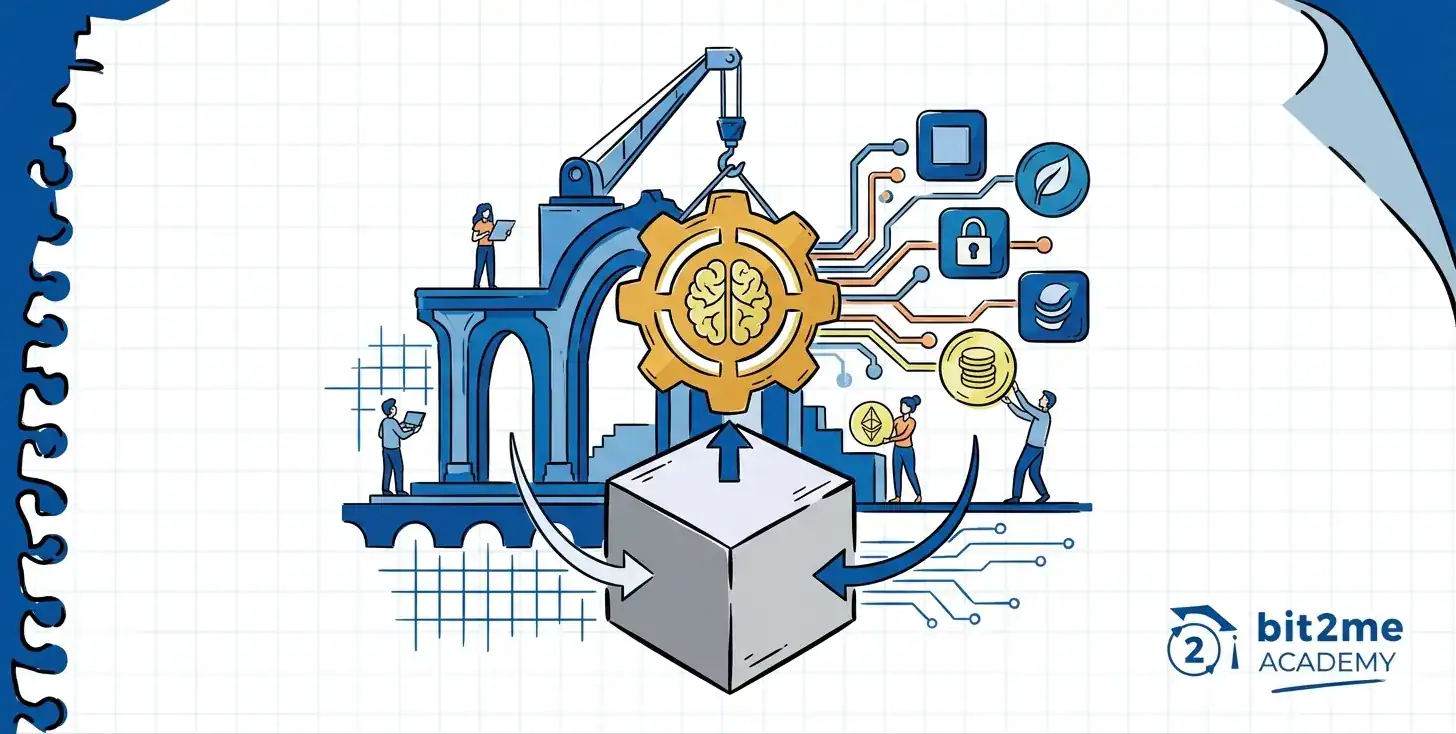
- Infrastructure such as "Gas": Layer 1 assets (such as Ethereum or Solana) should be understood as computing royalties or "digital oil"; their value is directly proportional to the workload and volume of applications that their gears process.
- Tokenization of the real economy (RWA): The most solid move of the decade is the fragmentation of tangible assets (real estate, gold, bonds) on the blockchain, which gives the token a physical value base and democratizes access to global liquidity.
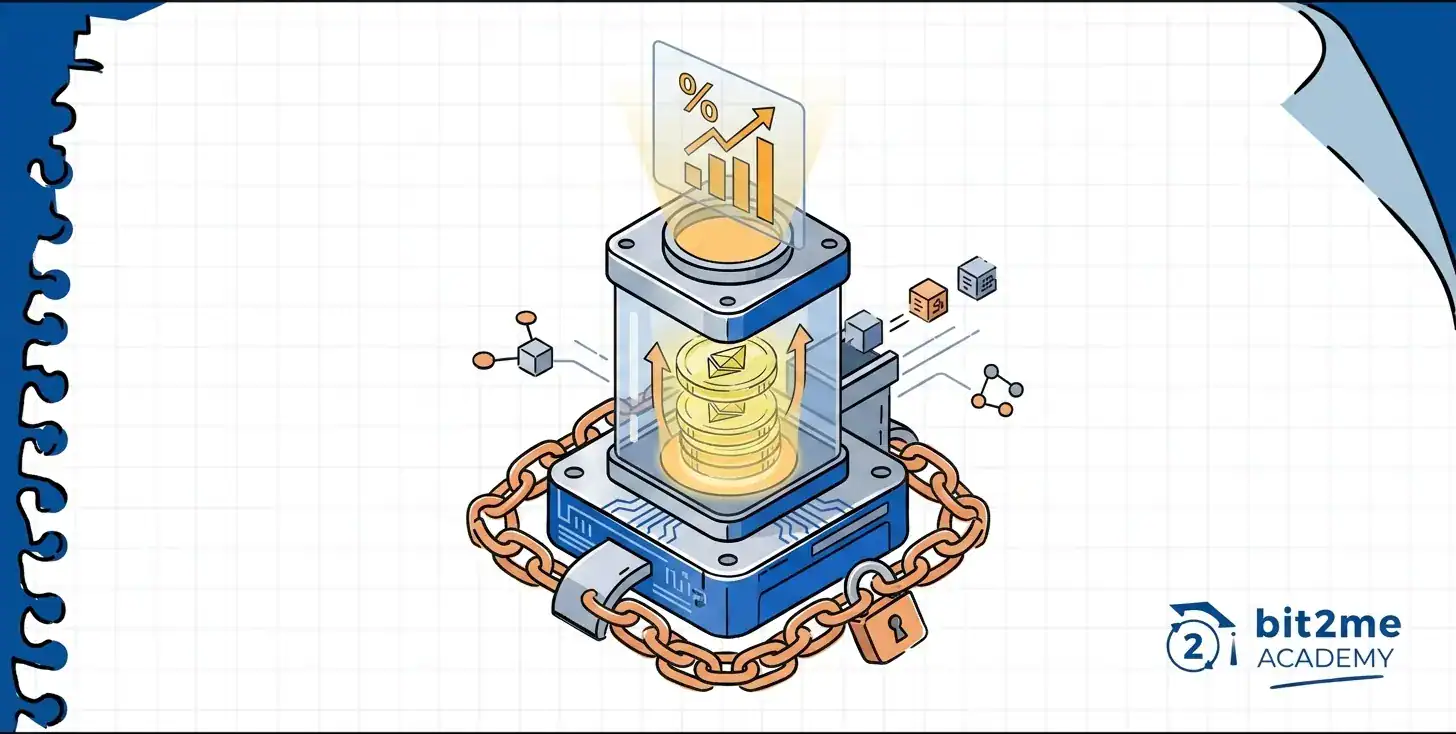
- Financial engineering risks: The rise of Liquid Staking Tokens (LSTs) improves capital efficiency, but introduces a danger of circular leverage; a house of cards of debt that could collapse if the underlying asset suffers a violent correction.
If you still think the digital asset sector boils down to buying a cheap coin and waiting for a tycoon's tweet to send it to the moon, you're late to the party. Way late. The market has matured through hard knocks, and what we have on the table today is a complete reconfiguration of ownership and value transfer. It's no longer enough to just look at a chart; you have to understand what's happening under the hood of each protocol.
The end of the era of empty speculation
Classifying crypto assets is not a boring academic exercise for armchair economists; on the contrary, today it's a financial survival technique. Gone are the days when any project with a white paper promising talent was raising millions.
In today's landscape, the distinction between a token with real utility and an empty shell determines whether your portfolio has a future or will vanish in the next market correction. We've moved from hype driven by price and catchy words to validation based on value stream. What problem does this asset solve? Who uses it besides speculators? If you can't answer that, you don't have an investment; you have a lottery ticket that will soon expire.
And that leads us to a clear classification, one in which digital assets shine because of their ownership and what they offer to the public interested in them.
Reserve and Payment Assets: Beyond Satoshi's Vision
The original design envisioned a peer-to-peer electronic cash system. However, technical realities have taken a different course.
On one hand, we have assets with limited supply that have mutated into a kind of programmed digital scarcity. These are reserve assets. Their value doesn't lie in using them to buy bread—that would be inefficient and expensive—but rather in their ability to act as an anchor of value against the inflation of traditional currencies.
Is it a viable payment method? Probably not at its core. That's why networks optimized for transaction speed have emerged, sacrificing some decentralization in exchange for processing thousands of transactions per second. The value architecture here is divided: either you hold the asset because it's scarce, or you use it because it's fast. Mixing these two concepts is usually the first mistake beginners make.
Real-world examples of the ecosystem
To understand this better, let's see who's who in this film:
The “Digital Gold” (Reserve): Bitcoin (BTC)
It's the ultimate example. Its network is slow (7 transactions per second), but it's the most secure on the planet. Nobody uses it to buy gum, but institutions use it to protect themselves against the devaluation of national currencies.
The "High Speed Rails" (Toll):
- Lightning Network: A layer built on top of Bitcoin that allows instant and almost free payments, solving the dilemma of "paying for coffee" without congesting the main network.
- Left (LEFT)A network specifically designed for performance. It processes thousands of transactions per second (TPS), ideal for consumer applications and games, although it sometimes sacrifices stability.
- Stablecoins (USDC/USDT): They are the bridge. You use the Polygon or Ethereum network (Layer 2) to send digital dollars in seconds. It's the "cash" of the crypto world.
The Hybrid: Ethereum (ETH)
It functions as a reserve asset for the ecosystem DeFi (decentralized finance) and as fuel (payment) to run smart contracts. It's "digital oil": it has value because of its scarcity, but it needs to be burned for the machinery to function.
Smart Contract Platforms (Layer 1)
Calling Ethereum, Solana, or Cardano It's like calling a liter of gasoline "currency" while trying to drive across the country. They're not money in the traditional sense; they're computing fees. If you intend to execute a digital rental agreement or manage insurance without going through an intermediary, you need someone to validate that transaction. And that someone doesn't work for free. The native digital asset of these networks is the fuel that makes the gears turn. Nothing more, nothing less.
Here, value ceases to be a subjective abstraction and becomes a workload metric. Are thousands of applications running on the network? Are millions of users interacting with DeFi protocols every second? Then the demand for the token is real, constant, and, above all, compelling.
It's pure infrastructure. You shouldn't buy the asset simply hoping a chart turns green, but because we understand the market needs that resource to operate. The logic is undeniable: if the network shuts down or the developer ecosystem moves to another platform, the cryptocurrency loses its purpose. No matter how cutting-edge the project's website or how elegant its typography, a token from an empty network is worthless digital waste. What's the point of fuel if no one has an engine to burn it in? Probably nothing.
The DeFi Ecosystem and Liquid Staking Tokens (LST)
This is where financial engineering becomes exciting and, at times, reckless. Conventional staking is simple: you lock up your crypto assets to strengthen the network and, in return, receive a scheduled reward. However, in a market that moves at lightning speed, having capital locked up is an inefficiency that few are willing to tolerate. Liquid Staking Tokens (LSTs) were born out of this impatience.
The mechanics have a touch of accounting sleight of hand. You lock up your main asset, but the protocol gives you a new token in return that represents that position. It's a receipt on steroids that you can continue to use in other applications. Imagine you deposit your savings in a fixed-term account and the bank, instead of thanking you, gives you a certificate that the corner supermarket accepts to pay for your groceries.
On paper, it's a victory for liquidity. In practice, we're building a house of cards of circular leverage. By using that "receipt" as collateral to borrow more or generate more returns, we create layers of debt that depend on a single underlying asset. If the price of that main asset stumbles, the domino effect is swift: automatic liquidations wipe out entire portfolios in the time it takes for a single block to be confirmed. Do we really need to add so much complexity and risk to a single piece of collateral? Prudence dictates no, but in this sector, prudence is often the first casualty of greed, at least until the system collapses.
Utility Tokens vs. Governance Tokens
There's an uncomfortable truth that's often overlooked in crypto communities: Most governance tokens are, in practice, a decorative facade. We are sold the romantic idea of the DAO (Decentralized Autonomous Organization) as the pinnacle of financial democracy, a place where your vote decides the fate of the protocol.
But let's get real. What's the point of pressing a "Yes" or "No" button when three whales and two venture capital funds control 90% of the voting power? That's not a democracy; it's an oligarchy with a better user interface.
In many cases, this type of cryptocurrency is nothing more than a legal smokescreen. By granting "governance rights" instead of dividends, founders try to evade regulators' scrutiny, preventing the token from being classified as illegal. It's a dangerous legal balancing act.
Conversely, a true utility token is defined by its technical necessity, not its ability to influence public opinion. It either grants you access to an exclusive service, drastically reduces your fees, or is an essential component for the software to function properly. It's a tool, not a political pamphlet.
Before committing your capital, ask yourself a direct question: Does this asset solve a real technical problem, or does it just allow me to participate in surveys that the developers will ignore anyway? If the answer is the latter, what you have here is smoke and mirrors disguised as a protocol.
Stablecoins: The silver bridge to the FIAT system
Stablecoins are, in essence, the glue that prevents the ecosystem from disintegrating in the face of volatility. Without them, conducting any moderately serious commercial activity would be like trying to build a house while the ground shifts three meters every hour. They are the necessary refuge, but also the point where the utopia of decentralization clashes head-on with the reality of the traditional banking system.
That said, there are two main stablecoin models currently:
- Collateralized models (USDC/USDT): They represent the de facto standard. There are no mysteries here: for every token in circulation, there is a dollar (or a Treasury bond) held in a bank account. They work, yes, but only because we have chosen to trust the word of an auditor and the solvency of an issuing company. They are boring assets, lacking technological flair, but indispensable to prevent money from evaporating between Monday and Tuesday. Ultimately, this "silver bridge" depends on conventional banks continuing to play the same game as us.
- Algorithmic models: This is where the scars of war still fester. The idea of maintaining parity with the dollar through pure mathematics and arbitrage mechanisms, without any tangible backing, has proven to be collective suicide far too often. Recent history is a graveyard of capital that blindly trusted in codes promising endless stability and delivered absolute collapses in a matter of hours. Mathematical parity without collateral remains that "holy grail" many pursue, and so far, it has only served to demonstrate that the market doesn't forgive design flaws when panic triggers the sell button.
Real-World Assets (RWA) and Tokenization
We are witnessing the most ambitious move in distributed ledger technology: the absorption of the tangible economy. We're not talking about futuristic promises; we're talking about fragmenting buildings on Madrid's Gran Vía, gold bars, or Treasury bonds so they can live directly on the blockchain.
Tokenizing real assets allows ownership to move beyond a monolithic, cumbersome block and become something fluid. Why wait for a large investment fund to buy a commercial property when you can own a fraction and receive a proportional share of the rent on your mobile phone every month?
This paradigm shift represents the definitive democratization of liquidity. Markets that have historically been opaque, slow, and exclusive to large capital are opening up one code at a time.
Here, the digital asset sheds its purely speculative nature to embrace an intrinsic value: the physical asset that backs it. If the brick is there, the token has a value floor that no crypto market correction can completely evaporate. It is, quite simply, the most robust and transformative use case we will see this decade.
Infrastructure Tokens and Oracles: The Unseen Heroes
Without them, this entire architecture would collapse like a house of cards. Oracles are the critical bridges connecting the blockchain to reality; they are responsible for injecting data from the outside world—such as the price of oil or the outcome of a shipping transaction—into the smart contract. If the code doesn't know what's happening outside its digital bubble, it's absolutely useless. It's a powerful engine without a steering wheel.
To this we must add decentralized storage and distributed computing projects. They are the backbone, the reinforced concrete of the sector. These infrastructure crypto assets don't have the glamour of social media nor do they usually star in viral internet threads, but their relevance is absolute. They are pure utility assets.
If these protocols were to stop working tomorrow, the DeFi ecosystem wouldn't just be affected; it would collapse in a matter of minutes. Prioritizing the aesthetics of an interface over the robustness of the underlying infrastructure is the most common mistake made by novice analysts.
Privacy and Anonymity: The Regulatory Dilemma
Now we enter murky waters. There is a category of crypto assets designed with a single purpose: to shield the transaction trail. It is the right to financial privacy taken to its most advanced technical expression, a tool that allows users to operate outside the scrutinizing eye of third parties.
However, the clash with institutional surveillance is inevitable and fierce. Under the hammer of regulations like MiCA in Europe, these tokens live in a state of constant siege. Do they have a future? As a technological advancement, they are fundamental pieces for preserving individual freedom in an increasingly traceable world.
As a mass-market investment asset, however, they face a regulatory wall that threatens to push them out of major exchanges and relegate them to secondary markets. Investing here is, for now, more a matter of ideological principles than a purely financial decision. If you're looking for compliance and easy liquidity, this isn't the place for you; if you're looking for censorship resistance, there's nothing better.
Memecoins: Culture or Casino?
As much as it may sting for tech purists, we can't turn a blind eye. Memecoins lack technical foundations, support no infrastructure, and, in most cases, are utterly devoid of common sense.
But they have something that software doesn't always achieve: attention. In an economy where time and public interest are the scarcest resources, any token that manages to go viral is, in effect, capturing value.
We are witnessing a sociological analysis transformed into a real-time financial market. It's tokenized internet culture, a thermometer of collective sentiment. But let's not be fooled by elegant terms: it's a high-frequency casino.
If you decide to enter, do so knowing that the music can stop at any millisecond and that there is no technical safety net—or underlying utility—to cushion your fall. Here, you're not buying technology; you're buying a volatile narrative.
Conclusion: Towards invisible utility
The future of digital assets isn't about explaining to the user what kind of technology they're using. The sector will truly mature when the infrastructure becomes completely invisible.
Success isn't about knowing how to set up a node, but about sending a remittance to the other side of the world, buying a fraction of a property, or paying for an AI service instantly and transparently. Everything will happen in the background, on an architecture of interconnected crypto assets, without you needing to distinguish whether what's being transferred is a Layer 1, an RWA, or an LST.
The convergence of these tools points toward a more efficient, but also more sophisticated and complex, financial system. For those of us here now, the key is clear: stop obsessively checking the price on your phone screen. Start understanding the architecture of what you're buying, because in the next decade, value will reside not in speculation, but in the capacity of those assets to sustain the digital world to come.

FAQ – Digital Assets Guide



 Author