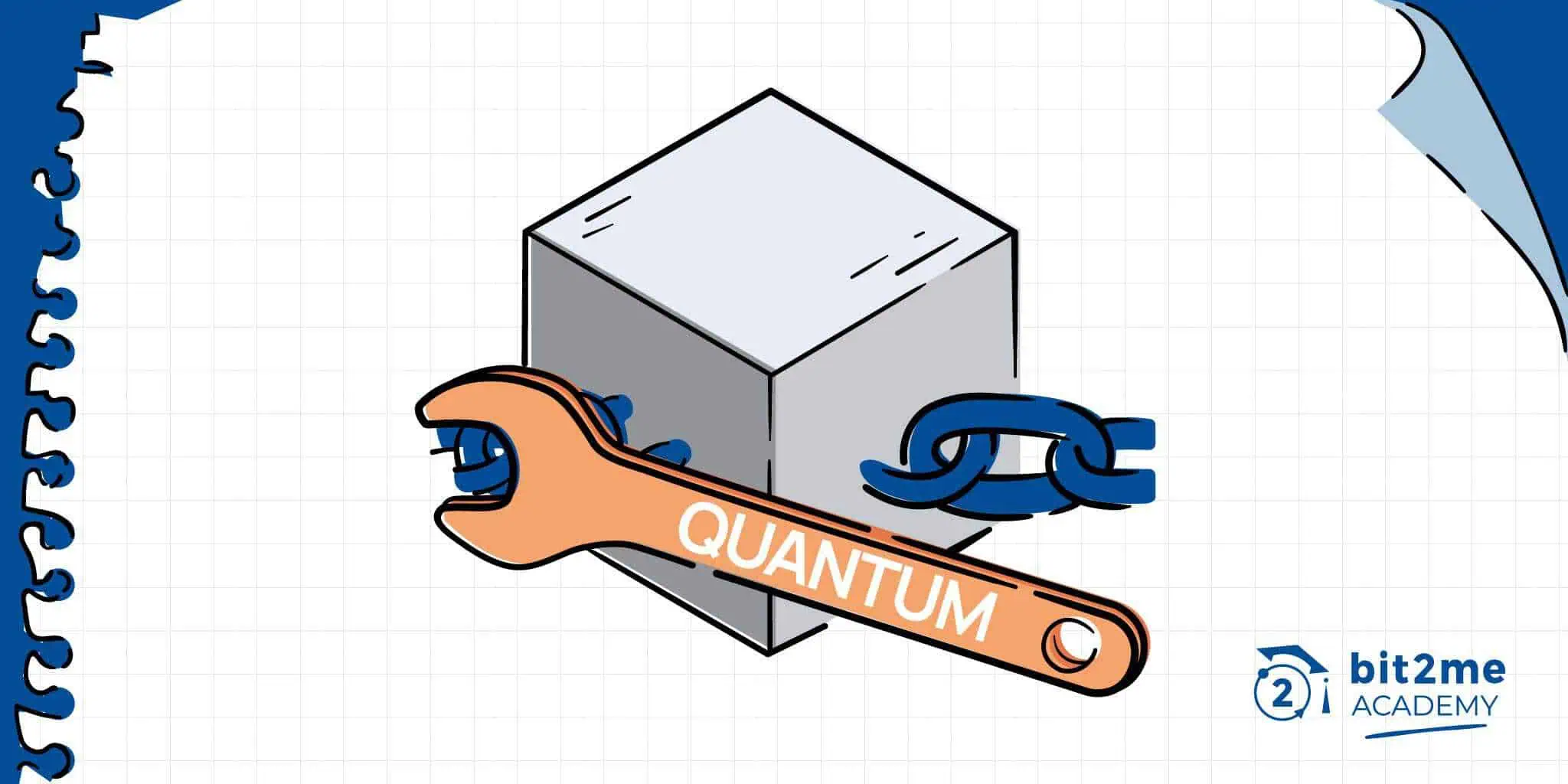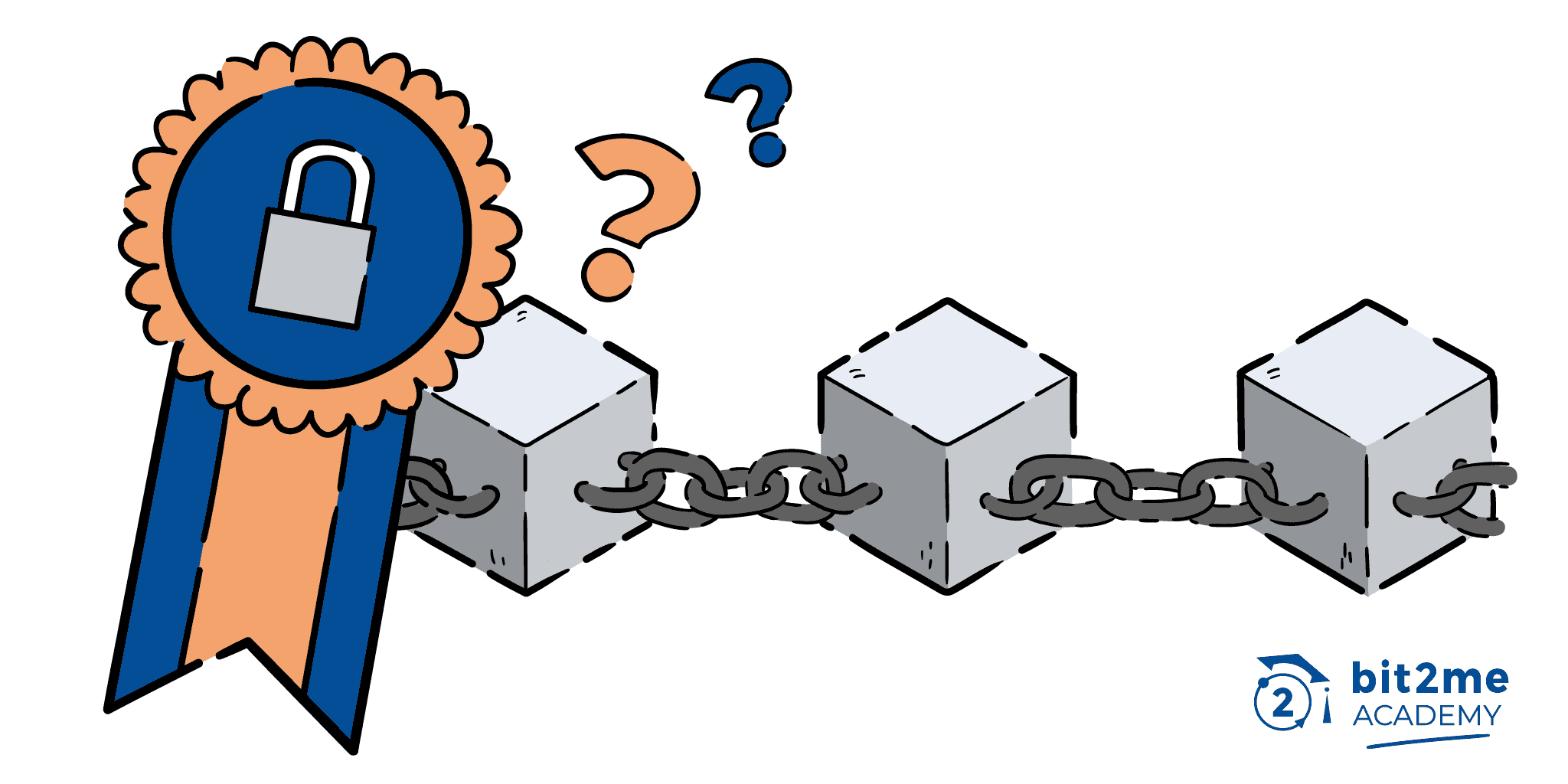
Some interesting myths have been created around blockchain security that make this technology look like a total panacea and something almost surreal, for that reason, we dedicate this space to break these myths and show the truth about this technology.
- Mathematical certainty vs. human error: Blockchain technology is extremely robust thanks to cryptography, but most incidents occur due to failures in personal custody or social engineering scams, not weaknesses in the blockchain itself.
- The myth of "Unhackability": Although networks like Bitcoin or Ethereum are virtually impregnable, the article clarifies that smaller projects or external layers (such as bridges and DeFi applications) can present critical vulnerabilities.
- Transparency as a shield: Unlike the traditional financial system, the security of the blockchain lies in the fact that anyone can audit the transactions and the code, allowing errors to be detected and corrected publicly and collectively.
- User Responsibility: By eliminating intermediaries, users regain full control of their money, but also absolute responsibility. Losing private keys or falling victim to phishing means, in most cases, the irreversible loss of funds.
Lhe safety has always been one of the main premises in favor of tecnología blockchain. In fact, in a way, security has become the first defense bastion of this technology that now conquers more and more spaces.
And is not for less, blockchain security is great, but achieving it takes hard work. In addition, it is not a magic solution, because as in any computer system the premise of cybersecurity always reigns:
There is no 100% secure computer system.
That is the harsh reality of the computing world, and blockchain, being a computing technology, is not exempt from this rule.
So why our confidence in your safety? Why have so many myths been created around this technology? What is the truth? In this article, we will try to show you several of the myths that have been created around blockchain technology.
The myths of blockchain security
Myth # 01: Blockchain is unsafe
One of the first myths that we usually see in the blockchain world is about the blockchain technology inability. The truth is that this is not 100% true. Certainly, blockchain technology has a high level of security, and more so if we compare it with any type of sector that is based on centralized technologies, but to classify it as "untouchable" would be a mistake.
Bitcoin, the world's first cryptocurrency has shown us several times that it has errors that can be dangerous for everyone. For example, several of its OP_CODES They were deactivated due to serious security problems, which, although not exploited, opened the doors to hacking said system and doing a lot of damage to it.
For example, the netsplit attack in Bitcoin allowed to consciously generate double expenses even in transactions with 1 confirmation. This error was known as a Bitcoin-killer, due to the enormous security problem of funds that it entailed. However, it was quickly repaired by the community. Like this case there are many, a total of 46 serious errors reported, and that's only in Bitcoin. There are many blockchain projects that can have more or less errors, and all of them are a window to hack them.
Entonces What protects us from blockchain catastrophe? Simple, the assurance that the community will detect these errors and correct them, as it has always done. And in the worst case, in the event that an error occurs that has not been detected ahead of time, the network can always agree to return to a block where that has not happened.
This in addition to the continuous work to develop security measures that avoid serious problems, and the always reliable decentralization, which will allow us to rebuild everything in case the worst happens.
But we can also be sure of something, that a project like Bitcoin has accumulated 46 serious errors, it is an incredible achievement, because in contrast Windows 10 (developed by one of the corporations that dominate the world) in just a period of 4 years accumulates more than 8100 errors.

Myth # 02: Blockchain is absolutely immutable
Another common myth in the blockchain world is the "Absolute immutability”From the blockchain. Something that is not true.
The truth is that the blockchain can be rectified or modified under very specific conditions and we who have read about it know that. 51% attack. This attack has the ability to significantly modify the blockchain despite the attempts we make to avoid it, and all this, within the parameters allowed by the protocol, because after all, the majority of nodes (51%) has decided so be it.
We have already seen the attack in action, Ethereum Classic (ETC) recently suffered another such attack. Bitcoin Gold was another recent victim of these types of attacks, and other cryptocurrencies are constantly suffering from it today.
But isn't Blockchain supposed to be immutable? The answer to this is: It is under certain circumstances. If a blockchain network has its power distributed among its nodes so that none of them have the majority of the power in their hands, then that network will be secure. If not, it is a recipe for disaster.
Hence the great importance that there are many nodes, and distributed throughout the planet. If you want to help the security of Bitcoin, we show you how to install your node here.
However, this rule does not have to be true all the time, there are blockchains that can be rewritten if a consensus is reached on that need, even if that consensus is reached under unclear circumstances. We see the example in Ethereum, that after the theft of The dao he rewrote part of his blockchain to reverse the theft and rescue the funds.
An example that blockchain immutability is certainly a property of the system, but that its members can turn off if they wish.
Myth # 03: All blockchain is highly decentralized
This is perhaps the worst myth of all, and it is because decentralization is misunderstood (or misused) in blockchain projects. And many projects, and companies, use the word “Blockchain” to confuse, trying to convey that they are a decentralized network when they are not.
For example, Bitcoin is a fairly decentralized network, although developers like Luke dashjr believe that there is still a long way to go to achieve "Safe zone of decentralization", that area where Bitcoin users turn to their own nodes instead of third parties to carry out their operations. The latter may sound utopian, but it would be the perfect example of absolute decentralization. Still Bitcoin is a good example of decentralization.
However, if we choose other projects like Ripple, Stellar, Tether, Bitcoin SV, Tron, UNUS, IOTA, Compound, BAT, Theta, ... that decentralization is lost. Yes, these projects are blockchain, some with great renown and a great economic level, but each and every one of them is decentralized what a Bank has as decentralized.
In short, they are projects that use the words “blockchain"And"decentralization”, To disguise an almost absolute centralization existing on their systems. And we are not talking about centralization at the development level, but also at the level of nodes, miners and other structures that make its operation possible.
Of course, the security implications at this point are immense. For example, there are many who justify that Craig Wright's decision to increase the size of BSV blocks to 2 GB, sooner or later, will have a profound impact on the security and distribution of the nodes of this cryptocurrency, falling into a constant and tighter centralization, destroying all the security of the blockchain model.
In this sense, this myth falls due to the clear evidence that a "blockchain project" is not automatically decentralized because it is a blockchain.

Myth # 04: Cryptography makes blockchain secure
This myth is perhaps one of the most complex of all to understand. The reason for this is because it is a half-truth. Cryptography is certainly the foundation of blockchain security, but crypto is constantly breaking down.
An example that demolishes this myth can be seen in IOTA. This cryptocurrency is based on technology DAG (Directed Acyclic Graphs) and uses a cryptographic function that was considered secure. However, a hacker managed to break this algorithm and as a consequence thousands of users were affected, with theft of funds and access to the seeds of their wallets. A serious problem where cryptography was not enough to maintain security. As a negative result, the IOTA network was down for 14 days until the problem was fixed.
In Bitcoin, something similar happened. Gregory Maxwell Distrusting OpenSSL, he decided to abandon the use of this project to build his own cryptography library, and all because OpenSSL was a project with many long-known security problems that had affected thousands of services on the Internet, with problems such as Heartbleed, Logjam and FREAK .
However, the operating model of Bitcoin, the management of its development and its active community is a successful formula to combat the problems that could come along this line.
Myth # 05: Smart contracts are the ultimate programming tool
The smart contracts They are seen many times as the greatest advance achieved thanks to the blockchain, and that view is correct. However, smart contracts are not inherently safe due to the fact of being executed on a blockchain, as many make it clear, on the contrary, a public smart contract is subject to public scrutiny, and if there are malicious actors among that public who can see a vulnerability, they will exploit it for a profit.
That is the reality of the sector DeFi currently and a reality that has caused a lot of commotion due to the multimillion-dollar robberies that have been carried out through these platforms. The worst thing is that once you upload a smart contract to a platform, deleting it is impossible (if they fulfill that of blockchain immutability), so the process of correcting the error is much more complicated to perform. Meanwhile, the door is open for the hacker and that is an unforgivable security breach.
Yes, smart contracts are very powerful, but their security is far from being perfect, in fact, we could say that it is still a work in progress, as we can see platforms like Ethereum, where they constantly seek to improve their language to enable development. safer from these types of tools.
Myths 2.0: What you thought you knew about modern security
As technology evolves, so do false senses of security. It is crucial to debunk the myths that are causing the greatest losses in today's ecosystem to understand that protection today requires a different mindset than it did a few years ago.
The Parity Fallacy in Layer 2
There is a widespread belief that if capital is on a Layer 2 network, it enjoys the same security as on the main network. However, the reality is more complex. Although networks like Arbitrum, Optimism, and Base inherit Ethereum's purpose, many still operate with control mechanisms known as "training wheels."
This implies a reliance on centralized sequencers or contracts that developers can update. If the bridge connecting the networks fails, or if the management team doesn't use multi-signature administrative keys, the funds are exposed to risks that simply don't exist at Layer 1. Therefore, it's vital to research the level of decentralization of each solution on specialized portals before depositing significant sums.
The mirage of smart contract audits
Another common myth is that an audited smart contract is 100% secure. An audit is not an absolute guarantee, but rather a technical snapshot at a specific point in time. The concept that code is law ignores the fact that many protocols have external dependencies, such as price oracles, which can be manipulated to drain liquidity.
Furthermore, a technical review doesn't always rule out the existence of governance "backdoors" intentionally left by developers. Instead of just looking for a seal of approval, users should analyze the protocol's security history and who actually controls the update keys.
The danger of malicious approvals
Perhaps the most dangerous myth today is the idea that, as long as the seed phrase isn't shared, no one can empty a wallet. Modern attacks have evolved to target spending approvals.
By connecting a wallet to a fraudulent website and signing an approval form, the user is legally granting the contract permission to extract their assets without needing to know their private key. This method allows theft to occur even days after leaving the website. It is recommended to treat each permission form with the same caution as the seed phrase and to use permission revocation tools regularly.
The paradox of Artificial Intelligence in security
Finally, it's often thought that Artificial Intelligence will make blockchain completely unhackable. However, AI is a double-edged sword. While it facilitates the early detection of vulnerabilities, it also provides attackers with tools to create polymorphic malware and deepfake phishing attacks that are almost impossible for the human eye to distinguish.
Technology has made the human factor more vulnerable than ever, so it is essential to implement off-screen verification processes, such as confirmations through alternative channels, especially before making large volume moves.
Expert Perspective: CISO's Tips for Protecting Your Assets
As CISO of Bit2MeMy day-to-day work involves anticipating threats that seek to exploit the weakest link in the chain: the user. Although blockchain technology is inherently secure, the security of your funds depends on the layers of protection you choose to activate.
Here are my direct recommendations, based on real-world experience managing the security of thousands of users:
- The Golden Rule of 2FA (Second Factor Authentication): Never, under any circumstances, use SMS as a two-factor authentication method. It is vulnerable to [vulnerability]. SIM Swapping. Always use authentication apps like Google Authenticator or, even better, physical security keys (like YubiKey).
- Password hygiene: Don't reuse passwords from other services (social media or email). If an external database is compromised, your crypto account will be the first target. Use a password manager and generate random passwords longer than 16 characters.
- Beware of "Artificial Urgency": Most thefts are not technical hacks, but social engineering attacks. If you receive an email or message with an extremely urgent tone asking for your passwords or to sign a suspicious transaction, stop. Exchanges will never ask for your seed phrases or passwords through private channels.
- Custody Diversification: Don't keep everything in one place. Use the exchange for trading and maintaining liquidity, but for your long-term savings (HODL), consider using cold wallets integrated with the security layers of your main account.
Security in the crypto world isn't a product you buy, it's a habit you cultivate. Bit2Me We're working to make the infrastructure a fortress, but you hold the key to the front door. Use it responsibly.
Conclusions
Computer security has always been a space where the impossible always ends up being possible. There are many systems that claim to be "unsafe" and they always end up yielding to some error in their systems sooner or later. It is something that reaches even the big ones, like OpenBSD, the most secure operating system in the world and that in its entire history (23 years) has only had two errors in its default installation.
That said, blockchain, although it is a very secure system, perhaps one of the safest to handle our money, is not an all-powerful and perfect solution. The truth is that we are far from that, and that although it sounds illogical, is a good thing. And it is that all advancement and technological advancement is born on the basis of need, and if there is a need for safer systems, this reality will make us work to achieve something better. In fact, this is what is happening today with projects that seek to improve and overcome their weaknesses.
In this sense, the future of blockchain security will always be positive, it will always go in the direction of improving what we have, to face the challenges of the future. That way we can rest assured, blockchain security will improve and with it, our impression of a technology that is changing the world.

 Author