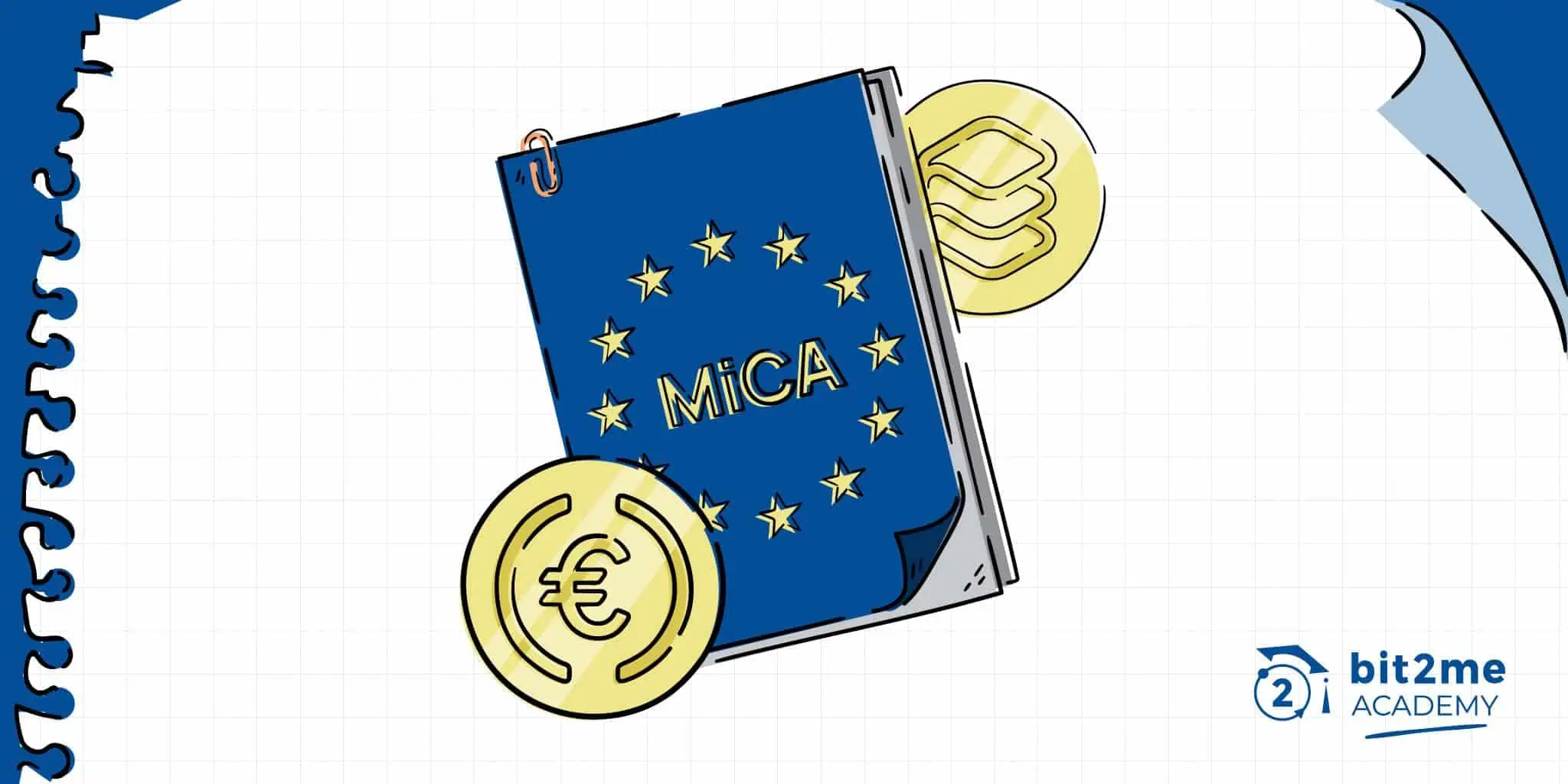
The arrival of the Markets in Crypto-Assets Regulation (MiCA) in the European Union has marked a milestone in the European financial ecosystem, especially in the field of euro-pegged stablecoins. This regulation, which came into force on June 30, 2024, has generated a significant change in the operation of these digital currencies, affecting both exchange platforms and users.
In this article, we will explore how MiCA has transformed the stablecoin market, which stablecoins are compliant, and what opportunities and challenges lie ahead.
MiCA Compliant Stablecoins
But before we begin our journey through the world of stablecoins in Europe, let's start with the most basic point: Which Euro-pegged stablecoins are MiCA compliant?
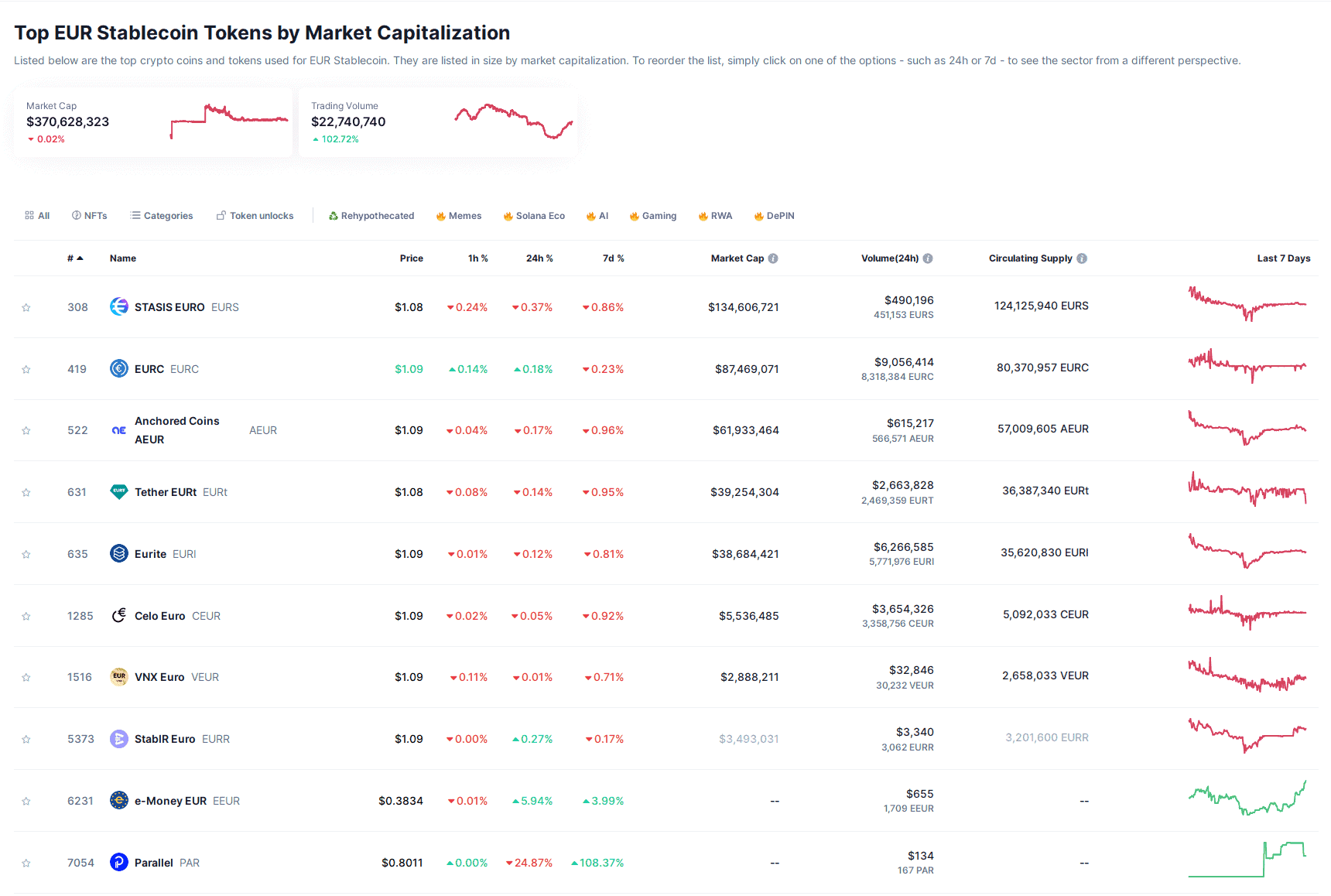
Although this article is constantly updated based on the different adaptations, as of October 21, 2024 the main ones on this list would be:
- EURC (Circle)
- AEUR (Anchored Coins)
- Euryte
- Stasis Euro
- EURCV (Société Générale)
- EUROP (Schuman Financial)
These digital currencies have managed to adapt to the requirements established by the regulations, which has allowed them to gain market share in an environment that is becoming increasingly restrictive for unregulated stablecoins.
However, the future of stablecoins in Europe is still up for grabs. As of January 1, 2025, MiCA regulation is expected to come into full force, which could bring with it new restrictions and new challenges for fintechs and users. Thus, the ability of euro-pegged stablecoins to thrive will largely depend on their market acceptance and the ability of platforms to adapt to the new regulations.
 Certificate
MiCA's impact on the stablecoin market
And this is where MiCA has had its greatest impact. First, because since the implementation of MiCA, the volume of operations with stablecoins pegged to the euro has suffered a drastic fall, estimated at 70%. This translates into a decrease in daily transactions from approximately 50 million euros to just over 20 million.
Even though stablecoins like Circle's EURC and Société Générale's EURCV have seen an increase in their market share, reaching 67% (According to data from Kaiko Research), overall activity has decreased noticeably. This phenomenon is largely due to the removal of unregulated stablecoins, such as Tether (USDT), from major exchanges, which has led to a contraction of the market instead of growth.
MiCA’s goal is to create a regulated and secure environment for cryptocurrencies, but the reality has proven to be more complex. While regulation has boosted the adoption of stablecoins that meet its requirements, the reduction in trading volume suggests that demand has not grown as expected.
Post-MiCA opportunities and challenges
On the other hand, the implementation of MiCA presents both opportunities and challenges for the stablecoin ecosystem in Europe. On the one hand, the regulation seeks to provide a clear and secure framework that fosters investor and user confidence in the use of cryptocurrencies. This could facilitate the adoption of compliant stablecoins, promoting their use in daily transactions and e-commerce.
Furthermore, restrictions imposed by MiCA, such as the €200 million daily issuance limit for euro-pegged stablecoins, could stifle innovation and limit competition in the market. Smaller fintechs, which may not have the resources to adapt to these regulations, could be forced out of the market, potentially resulting in a decrease in diversity and competition in the sector.
Furthermore, uncertainty about the future of unregulated stablecoins such as USDT poses an additional challenge. As more platforms align with MiCA, users are likely to look for alternatives on decentralized exchanges (DEXs), where regulations are less strict. This could lead to an increase in the use of unregulated stablecoins, which in turn could further complicate the situation for euro-pegged stablecoins.
Future outlook for stablecoins in Europe
With MiCA regulation in full swing, the future of stablecoins in Europe is somewhat uncertain. The regulation has the potential to create a safer and more regulated environment for cryptocurrencies, but it also poses significant challenges for fintechs and users. In that sense, the ability of euro-pegged stablecoins to thrive will depend on their market acceptance and the ability of platforms to adapt to the new regulations.
Additionally, it is important to consider the impact that regulation will have on market dynamics. As more platforms align with MiCA, we are likely to see increased competition among compliant stablecoins. This could result in improved services offered to users and further innovation in the sector.
Click here to open your user account in Spanish for FREE and securely and receive a €15 gift.

 Author