Essential Points
- From ideology to industry: The history of exchanges is the transition from a niche tool for cypherpunks to a regulated global financial infrastructure.
- Resilience in the face of failure: Each historical collapse (like Mt. Gox or FTX) has forced an evolution in custody, driving standards such as cold storage and real-time audits.
- Decentralization as a return: After years of dominance by centralized exchanges (CEX), history comes full circle with the rise of DEXs, returning control to the user through Smart Contracts.
- Regulatory maturity: The transition from "experimental platforms" to registered entities (such as Bit2Me before the Bank of Spain) marks the end of the crypto "Wild West" era.
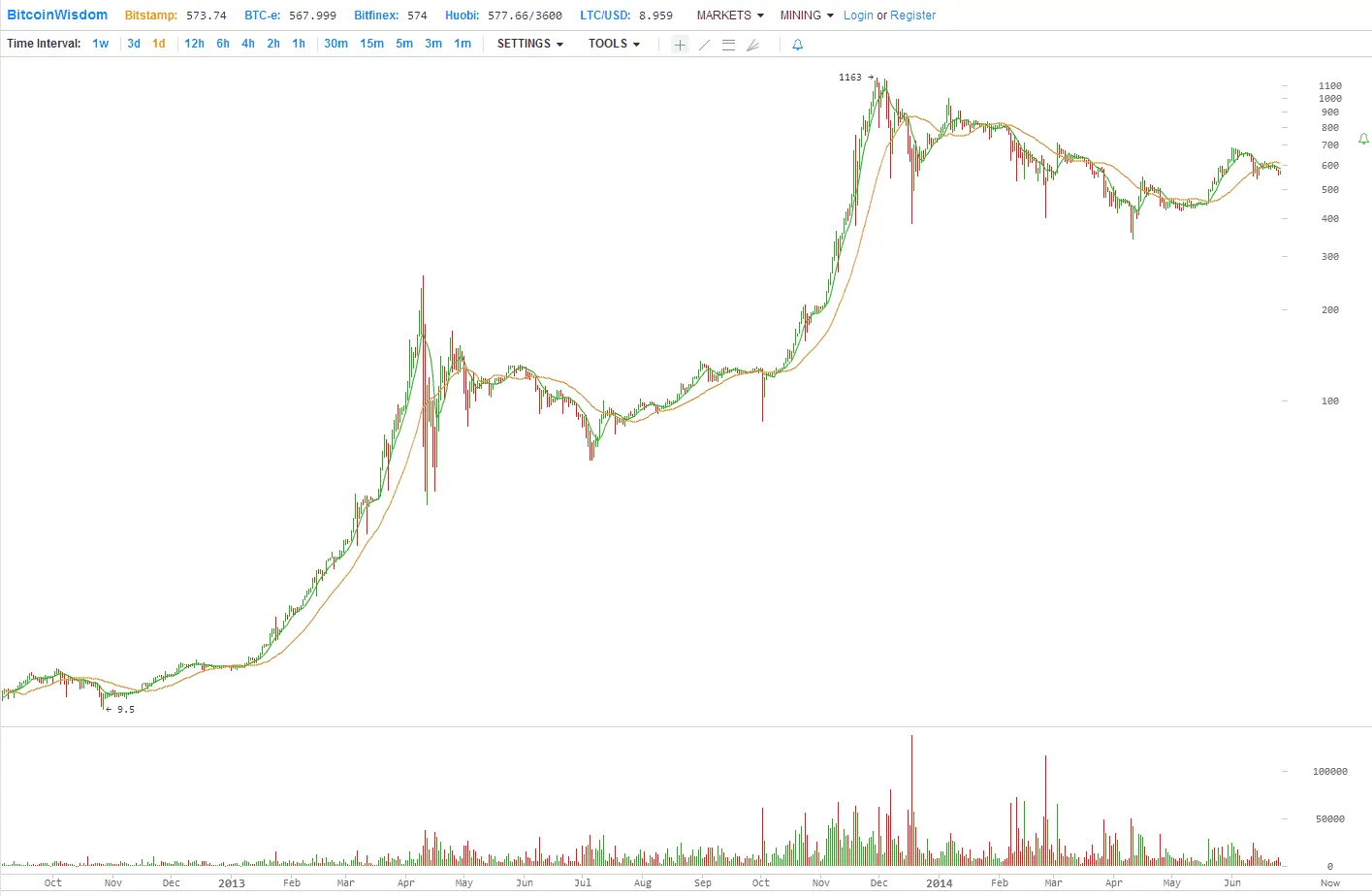
One of the most interesting points in the history of Bitcoin begins with the exchanges. And it is that despite all the news and changes at a social and economic level that Bitcoin offers, there are many people who know it for its periods of high volatility. It was these facts that aroused the interest of investors and the sector's press. Above all, driven by the trading and buying and selling opportunities offered by this cryptocurrency.
In its beginnings, (as we already explained in the article «How much is a bitcoin worth?«), a bitcoin started out worth 0 Euros. It was unknown to the general public. In 2009, the first exchanges that were made were purely to testing mode and without a specific market value. The first recognized transaction between two people occurred on January 12, 2009 across Satoshi Nakamoto y Hal Finney, a developer and crypto activist.
Over time, more computer scientists, mathematicians, cryptographers and people interested in this decentralized payment system joined the ecosystem.
However, it was not until October 5, 2009 that what would be one of the first bitcoin values on the market with a ratio equivalent to 1,309.03 BTC for $ 1. From that moment, the price began to fluctuate giving way to the first exchanges and market movements.
Thus began the relationship between Bitcoin, exchanges and market values.
In this article we will review all the most important events and history that have developed since the appearance of the first “exchanges”Or exchange houses in Bitcoin.
An important point before starting
Before we start our journey let's clarify something: Bitcoin has not turned nerds into economists. Surely you have come across this "meme" on many occasions in forums such as Bitcointalk or Reddit communities.

Bitcoin has been an opportunity for many to offer their services on the Internet and get paid in bitcoins. keeping privacy and without the difficulties imposed by other payment services. Just download any wallet, generate an address and send it to the issuer to make the payment. So no, all those computer scientists who are dedicated to trading will have studied a minimum to know the operation and mechanics of the markets.
The nature of Bitcoin allows any individual to discover it and start earning or moving their first bitcoins.
A little context
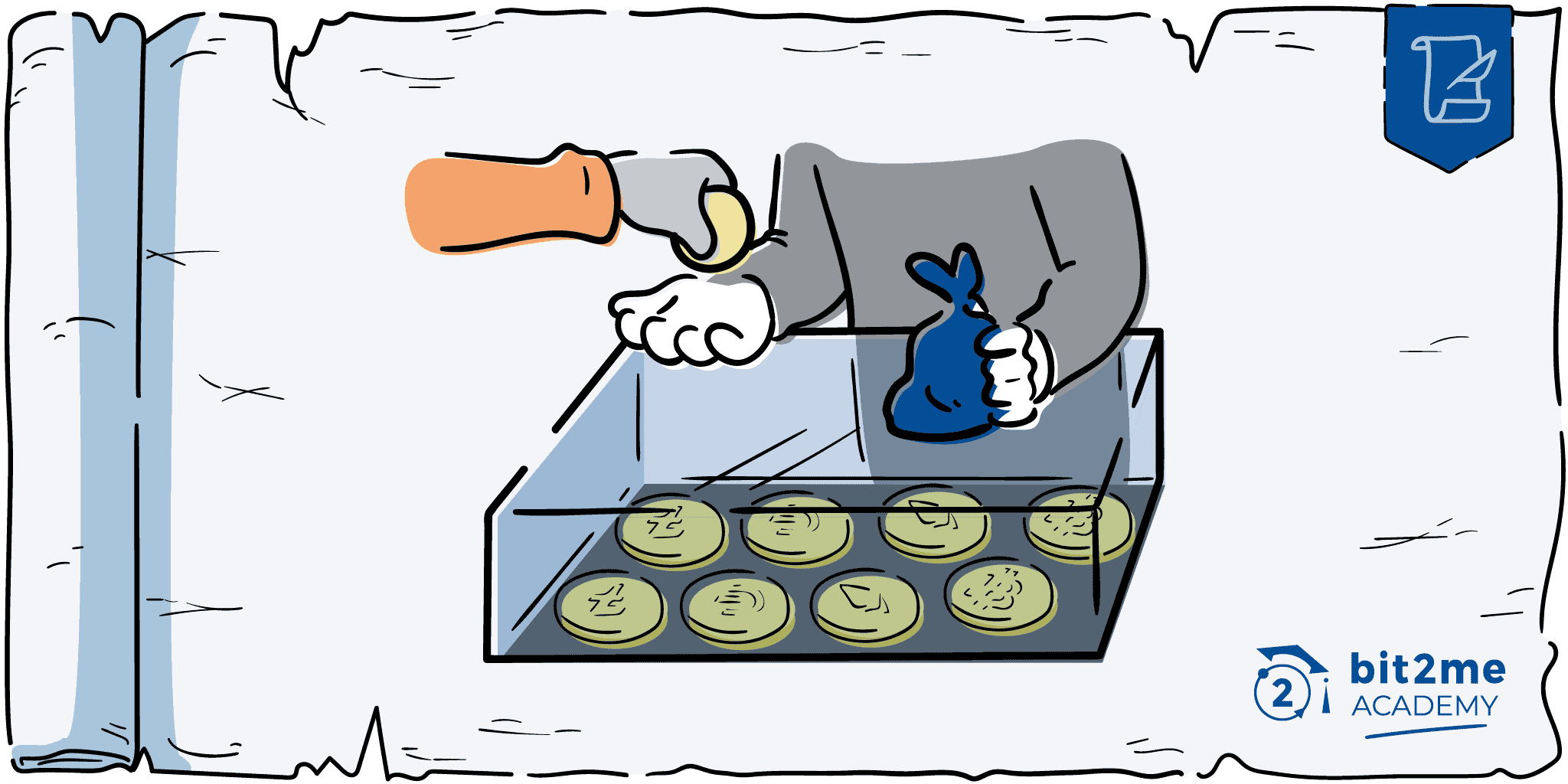
Currently, we are used to operating in exchange houses exchanging between different cryptocurrencies. This allows us to convert our digital assets into fiat money and vice versa. We could easily name at least five exchange houses from various countries. But every story has a beginning, an evolution and some main actors, among which Bitcoin occupies the place of honor among these exchanges.
Within the exchange category, it is convenient to differentiate between buying and selling platforms where we can exchange fiat money for cryptocurrencies. We also have trading platforms, which allow us to speculate live and offer a console to carry out operations in real time and tools for technical price analysis.
Some platforms are smaller, others larger, some more strict when it comes to adding cryptocurrencies and others more lax. At the moment of truth, what is relevant is that they all have the function of promoting exchange in a safe, simple and fast way.
Currently, we find a clear trend and it is the transition from centralized to decentralized trading exchanges. Centralized markets are those that act as intermediaries to make changes between different cryptocurrencies, such as going from Bitcoin to Ethereum and are due to the regulations of the different countries. Decentralized markets allow only trading cryptocurrencies that are on the same blockchain. Or what is the same, we could only exchange Ethereum between tokens created under its blockchain.
The first exchange rate
As we have already explained, at the beginning Bitcoin had a price of 0. For more than a year it had no real value (until Laszlo Haynek bought two pizzas with 10.000 BTC).
The entire Bitcoin economy was based on donations and exchanges as a test to see how the platform works. Here begins the history of bitcoin and the first exchanges or exchanges.
Despite having no real value, it was created on October 5, 2009 a bitcoin buying and selling service called the New Liberty Standard that towards a value ratio of 1.309,03 BTC for $ 1. This value relationship was established according to the energy cost of mining Bitcoin or what is the same, a kind of compensation for the mining of blocks according to the price of electricity. Thus began an endless story that would take Bitcoin exchanges to take off in the world.
First bitcoin to fiat exchange
There are countless solutions to convert our cryptocurrencies to fiat money and vice versa, but at first this was not so simple. The first transaction of this type is registered on October 12, 2009 where New Liberty Standard buys a total of 5.050 BTC from Sirius for an amount of $5.02 through PayPal.
Said operation established that approximately 1.010 BTC equaled $1, which represents the first increase in the value of the Bitcoin price and a significant revaluation.
Found the first known bitcoin to USD transaction from my email backups. I sold 5,050 BTC for $ 5,02 on 2009-10-12. https://t.co/8XcBmzJljf
- Martti Malmi (@marttimalmi) January 15, 2014
This action was undoubtedly a milestone in the history of bitcoin exchanges, and began an unprecedented transformation.
The Bitcoin Market is born
In February of 2010 a Bitcointalk user named dwdollar created a portal called Bitcoin market in which bitcoins could be bought and sold from person to person, including payment systems such as Paypal, thus becoming one of the first references in the purchase and sale of BTC known to date. On June 4, 2011, Paypal stopped offering support in the Bitcoin Market due to the fraud that some users were doing, claiming that they received nothing in exchange for what they had paid for the bitcoins.
The arrival of Mt. Gox
On July 18, 2010 appears on Bitcointalk a rather brief message where the creation of the first exchange itself is reported, where the parameters of the last price are established in an exchange operation, the highest and lowest value in the last 24 hours, the volume in the last 24 hours, thus such as the price of the highest selling positions and the lowest buying positions.
Jed McCaleb was the creator of this exchange which was sold on March 6, 2011 to Mark Karpeles. It became one of the most important platforms until its controversial, dark and strange ending and the disappearance of all the user's bitcoins.
Three new exchanges with other fiat currencies
Approximately within ten days, three new exchanges appear that innovate allowing exchange in fiat currencies that are not dollars. Britcoin is born on March 27, 2011 It allows you to exchange bitcoins to British Pounds (GBP). On March 31, it starts its Bitcoin Brazil services that allows the exchange between pairs by means of Brazilian reals (BRL). Finally BitMarket.eu is born on April 5 that allows the exchange of bitcoins to euros (EUR)
Hacks begin
Although the case of Mt. Gox is the best known and is the first after this, many more cases have come. We will only review a few cases and very briefly, since we have developed a specific article to discuss the thefts of bitcoins and other cryptocurrencies.
- Gox: On June 19, 2011 unknown attackers force a security breach and steal thousands of bitcoins from users and compromise usernames and email accounts.
- Bitomat: Important Polish exchange that became the third in volume suffers an attack and 17.000 BTC are stolen from users.
- MyBitcoin: About 120.000 bitcoins are stolen from users, which at the time was equivalent to two million dollars.
- TradeHill: Close to $ 100.000 was lost, causing the immediate closing of the exchange house, which in February 2012 was the second with the highest volume.
- Bitcoin: On May 11, 2012, he suffered the theft of 18.000 BTC, which at that time was equivalent to $ 90.000.
Latest Hacks
Bitfinex (August 2016)
This is one of the most fascinating cases due to its almost cinematic resolution years later.
- The incident: The attackers exploited a vulnerability in Bitfinex's integration with the custodian BitGo, causing the system to sign unauthorized withdrawals.
- Impact: 119.756 BTC were stolen (about $72 million at the time).
- The final twist: In 2022, the U.S. Department of Justice recovered most of the funds and arrested a couple in New York (Ilya Lichtenstein and Heather Morgan) who were attempting to launder the money. Lichtenstein eventually confessed to being the original hacker.
Coincheck (January 2018)
This hack surpassed Mt. Gox's record in terms of dollar value at the time, shaking the Japanese market.
- The incident: Hackers infected employees' computers with malware via email, obtaining the private keys of "hot" wallets.
- Impact: 523 million NEM (XEM), valued at $534 million, were stolen. Coincheck's mistake was keeping a massive amount of funds in internet-connected wallets instead of using cold storage.
Binance (May 2019 and October 2022)
Even the world's largest exchange has been the target of successful attacks, although its response set a standard in the industry.
- 2019 Attack: Hackers used a combination of phishing and malware to steal 7.000 BTC. Binance covered all losses using its SAFU (Secure Asset Fund for Users) fund, so no customers lost money.
- 2022 Attack (BNB Chain): An attacker exploited a vulnerability in the "bridge" connecting different Binance blockchains, successfully minting 2 million BNB (approximately $570 million). The network was quickly shut down, limiting the actual damage.
Ronin Network – Axie Infinity (March 2022)
This is considered one of the biggest heists in the history of decentralized finance (DeFi) and video games.
- The incident: The North Korean group Lazarus managed to compromise the keys of 5 of the 9 validator nodes of the Ronin network through a fake job offer sent to an engineer.
- Impact: They stole 173.600 ETH and 25,5 million USDC, totaling more than $625 million.
The FTX "Farewell" Hack (November 2022)
Amid FTX's collapse and bankruptcy declaration, an additional incident occurred that added chaos to the situation.
- The incident: Hours after declaring bankruptcy, massive unauthorized withdrawals were detected from FTX wallets. It is suspected that this may have been an inside job or an exploited vulnerability in the chaos of the shutdown.
- Impact: Nearly $477 million in various assets disappeared, which were then quickly converted to Ethereum in an attempt to cover their tracks.
Bybit (February 2025) – The most recent record
- The incident: Hackers linked again to the Lazarus Group exploited a leak of private keys in the hot wallet system of this Dubai-based exchange.
- Impact: 400.000 ETH, worth a record $1.400 billion, were lost in a matter of minutes, making it the largest single theft in history to date.
Exchange today
We have seen the most relevant events throughout the history of the exchange and there is still a lot to happen, both positive and negative, unfortunately. What interests us now is to know how the panorama is and to talk a little about which are the largest markets at an international level. In addition, there are also Decentralized exchanges (DEX) that offer a purer Web3 experience to users.
"Personally, I hope that centralized exchanges will definitely burn into hell as much as possible."
Vitalik Buterin at the 2018 TechCrunch Blockchain Conference
General data
Right now, the situation seems favorable for the cryptocurrency market and specifically for exchanges in much of the world. If we look at the data from CoinMarketCap we can see that there are more than 614 exchanges that are listed on this website, a figure that has fallen in recent years, largely due to the 2022 crisis.
The countries are beginning to regulate and establish specific rules for the operations of the exchanges. South Korea and Japan are the most progressive and most open to these platforms as long as they comply with certain rules focused on transparency and avoiding money laundering.
Switzerland, Estonia and Malta are the ones that provide the most facilities when establishing exchanges and other projects based on cryptocurrencies, because they have clear laws that must be complied with and that seek to protect users. The United States began by supporting exchanges, although after the FTX debacle, the government and agencies such as the SEC or CFTC have begun to closely monitor and put pressure on them and their products.
Exchange Europe
- Bitsamp: It remains one of the oldest and most regulated exchanges in the world. In 2024, Bitstamp was officially acquired by Robinhood Markets, one of the largest trading platforms in the US, with the aim of expanding its presence in the European and institutional markets. Although it maintains its headquarters in Luxembourg and offices in London, it is now part of the Robinhood ecosystem, strengthening its regulatory compliance under the MiCA regulation in the European Union.
- LocationBitcoins: After more than a decade as the leading P2P (peer-to-peer) trading platform, LocalBitcoins announced it would cease operations in February 2023. The company cited the challenges of a prolonged "crypto winter" market and an increasingly stringent regulatory environment in Finland and the EU. The site allowed a withdrawal period, but no longer offers exchange services, marking the end of an era for classic decentralized trading.
- CEX.io: Unlike many competitors, CEX.io has successfully navigated British and European regulations. In 2024 and 2025, the platform focused on obtaining additional licenses in key jurisdictions and launched CEX.io Prime, a division dedicated exclusively to institutional and corporate clients. They continue to maintain very rigorous criteria for listing new assets, prioritizing projects with high liquidity and legal compliance.
Exchange United States
- Kraken: It remains a pillar of security in the sector. Although Jesse Powell stepped down as CEO in 2023 (remaining as chairman of the board), the platform has grown exponentially. In 2024 and 2025, Kraken focused on its institutional custody division and expanding its own bank (Kraken Bank). Despite legal battles with the SEC over staking, it remains the preferred exchange for professional traders due to its liquidity in Bitcoin and euros.
- Coinbase: It is by far the most influential exchange in the US. After its IPO, it became the primary custodian of most spot Bitcoin ETFs approved in 2024. Under Brian Armstrong's leadership, the company has diversified its revenue streams with the Base layer-2 network, which has become one of the most widely used in the ecosystem, facilitating regulated access to DeFi.
- Bittrex: Unfortunately, Bittrex is no longer operating. In May 2023, the US division filed for bankruptcy after facing SEC charges for operating an unregistered stock exchange. Shortly after, Bittrex Global (its international arm) announced the complete cessation of its operations in December 2023. The platform now exists only in the industry's historical records.
- Poloniex: Founded in Delaware, USA, by Tristan D'Agosta in January 2014, Poloniex is one of the most demanding cryptocurrency exchanges, offering robust security measures to protect its users. However, Poloniex no longer has its primary operations in Delaware. After being acquired by a consortium that includes Justin Sun (founder of TRON), the platform almost entirely detached itself from the US market to avoid strict regulations. In the last two years, it has suffered significant security incidents (hacks) and has focused its strategy on the Asian market and the listing of "memecoins," moving away from its former reputation for being "demanding" with the assets it lists.
Exchange Asia
- Bitfinex: Founded in 2012 by Raphael Nicolle and Giancarlo Devasini, Bitfinex is known for its reliability and security, and was one of the first exchanges to enter the market. It ranks second in Bitcoin trading volume. It maintains a close relationship with Tether (USDT) through its parent company, iFinex. Although it has historically had some issues with regulators, Bitfinex has established itself as the preferred platform for high-volume traders thanks to its advanced lending and margin tools. Its main operational headquarters are now located in the British Virgin Islands.
- HTX (Huobi): The Singapore-based exchange founded in 2013 by Leon Li is one of the largest in terms of Bitcoin and other cryptocurrency trading volume. In September 2023, on its tenth anniversary, Huobi changed its name to HTX. The change reflects a new era under the guidance of Justin Sun (founder of TRON). Although its roots are in Singapore, its structure is now global and decentralized. It remains a giant in terms of liquidity, though it has lost some ground to Binance and OKX.
- OKx: Founded in 2013 by Star Xu based in Beijing, China. The exchange house is the third in volume of exchange of BTC and the first in Ethereum and EOS, among others. One of the most important today.
- bitflyer: It is the largest cryptocurrency exchange in Japan and was founded on January 9, 2014. It complies with Japanese regulations regarding transparency and security. It remains the benchmark in the Japanese market, operating under the strict supervision of the Japan Financial Services Authority (JFSA). In 2024, bitFlyer took a strategic step by acquiring the Japanese subsidiary of FTX, further consolidating its dominance in the local market. It is known for being one of the most secure platforms in the world, with some of the most rigorous verification processes.
- Binance: Founded in 2017 by Changpeng Zhao and headquartered in Shanghai, China, Binance currently handles the largest volume of Bitcoin trading and is gaining importance daily. Although its headquarters are no longer in Shanghai (following the ban in China), meaning it no longer has a physical location, Binance has become a much more regulated entity, obtaining licenses in multiple jurisdictions and maintaining its position as the world's number one exchange by trading volume. Following a landmark agreement with the U.S. Department of Justice in 2023, Changpeng Zhao (CZ) stepped down as CEO and was succeeded by Richard Teng.
It starts at Bit2Me Jump into the world of cryptocurrencies with a head start. Sign up easily and get €15 FREE on your first purchase with this link. Don't wait any longer to join the crypto revolution! Join Now
 Author