Essential Points
- Cryptographic Unidirectionality: A Bitcoin address is created from a private key, but it is mathematically impossible to reverse the process to obtain the key from the address.
- Diversity of Standards: There are three main formats (P2PKH, P2SH and Bech32) that dictate both wallet compatibility and the cost of transaction fees.
- Privacy by Design: Although an address is public, it does not contain the user's personal information, operating under a pseudonymity scheme within the distributed ledger.
- Error Prevention: Thanks to Base58 and Bech32 encoding, addresses include error detection codes that invalidate the transaction if a single character is modified.
Having established the foundation for understanding the overall flow of the network, it's time to get down to brass tacks and analyze what really matters: the money trail. If in the previous installment we explored the block structure in mempool.space, in this second chapter we'll delve into the information contained within Bitcoin addresses.
Before delving into the technical details, let's refresh our understanding of the process. The moment you initiate a transaction with your crypto assets, it doesn't magically appear at its destination. First, it must be propagated across the network, validated by the nodes, and finally, selected by a miner to be packaged into a block. During this "journey," addresses act as both the origin and destination of each transaction, and understanding them is your best digital lifeline.
Addresses aren't locked safes; they're public identifiers that block explorers allow us to audit with surgical precision. What can we learn from examining an address? Much more than meets the eye:
The DNA of an address on the Bitcoin network
When we paste an address into our browser's search bar, what we get isn't just a balance. We're accessing the complete history of its activity from the day it was created until today, April 2026. This is where the transparency of blockchain technology demonstrates why it's impossible to cheat.
When analyzing a direction, we must focus on three key points:
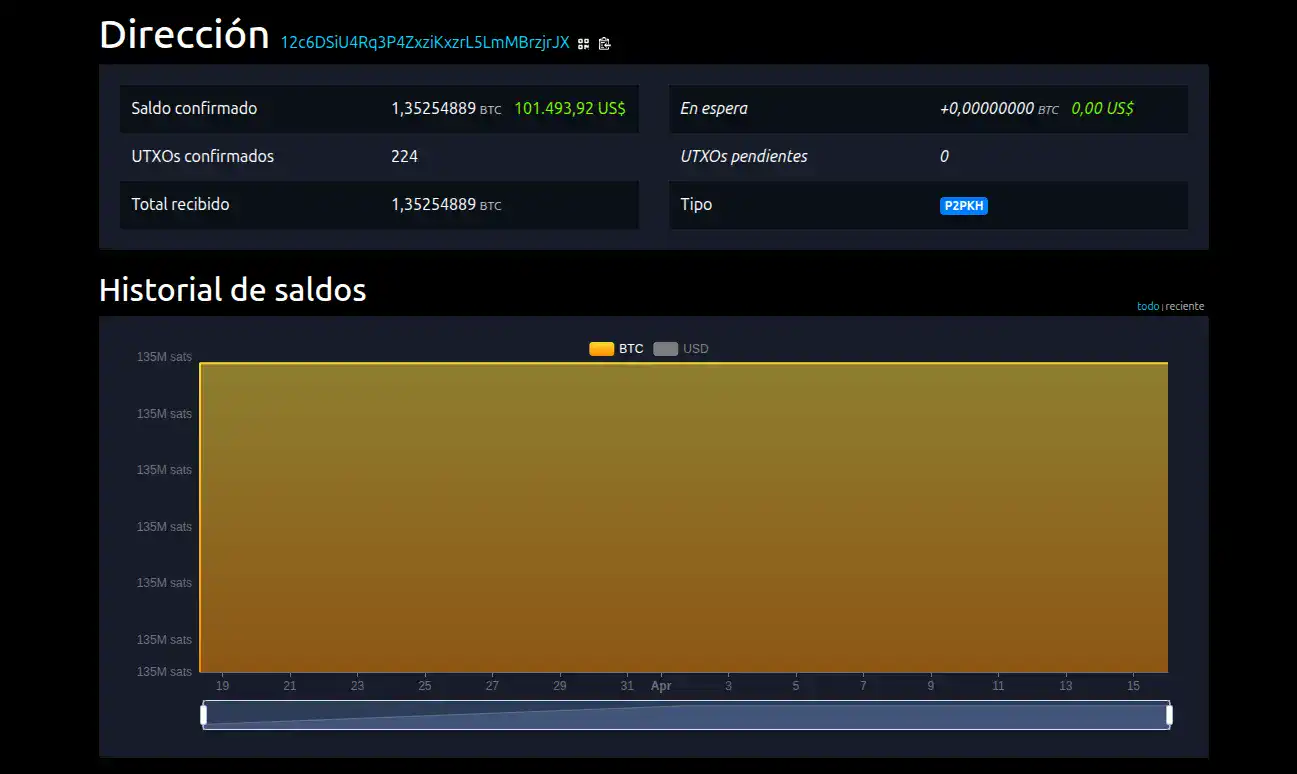
- Total Balance and Transactions: The explorer breaks down how much token has entered, how much has left, and what the current balance is. There's no room for error; if the data says there's 0.5 BTC, then that's exactly what there is.
- Status of UTXOs (Unspent Transaction Outputs): Although it might sound like gibberish, these are the "coins" that haven't been spent yet and make up the balance of that address. Seeing them helps us understand if the address belongs to a user who accumulates funds or one who constantly moves them around.
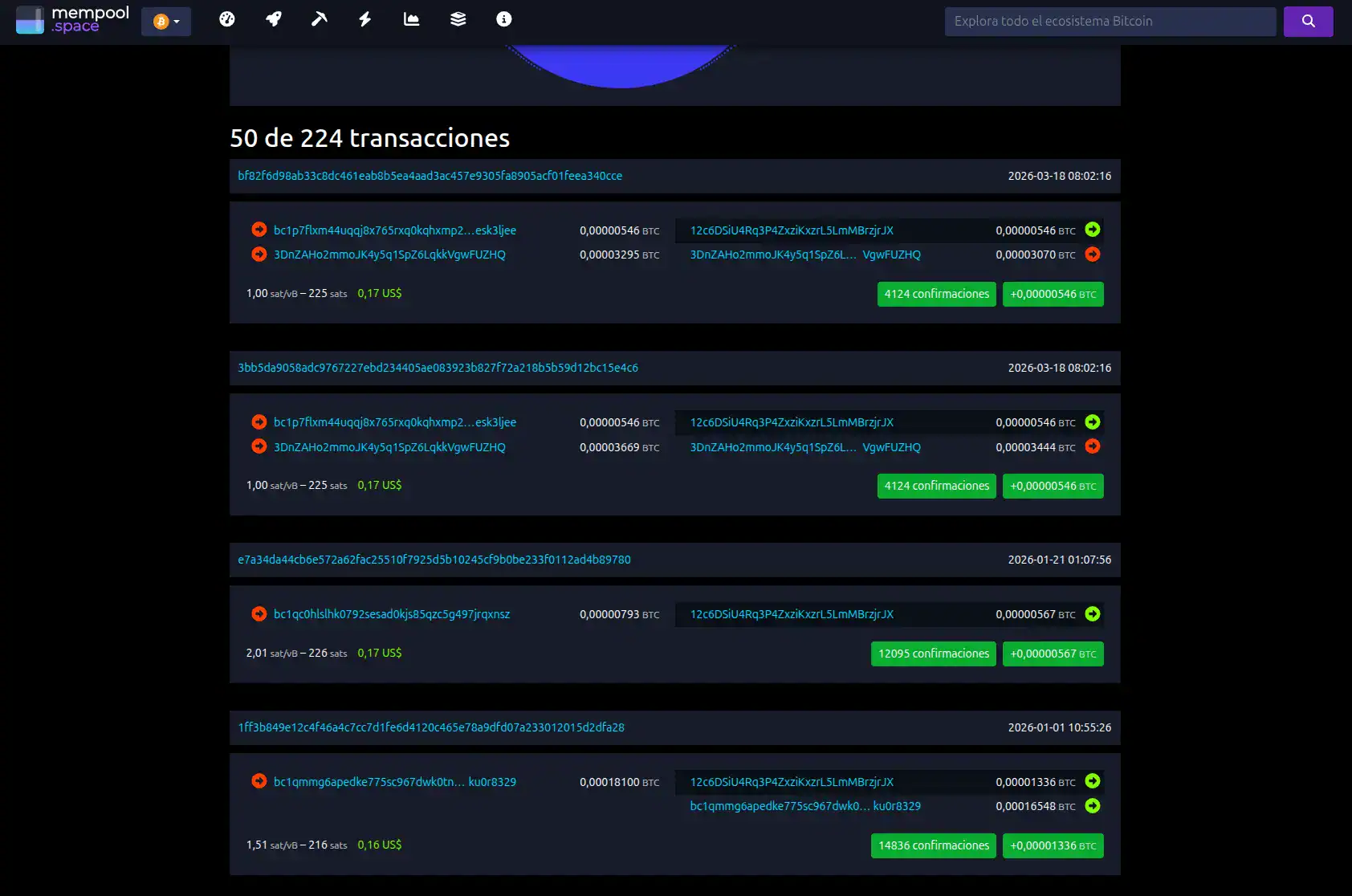
- Activity history: Each line represents an event. You can see the date, the block where it was confirmed, and, most importantly, whether there are any pending transactions that haven't yet left the mempool.
Why is mastering this vital? Imagine you're buying a digital asset from a peer or want to verify if a business has received your payment. You don't need them to send you a potentially manipulated screenshot from their phone. Simply enter the address into a search engine and see the reality of the network.
In an ecosystem where there's no customer service to turn to, your ability to audit an address is the only guarantee that you're not being scammed. Are you sure that the address you're about to send your funds to is really who it claims to be? Let's learn how to check.

Reviewing address information with a block browser
One of the most powerful tasks that an explorer like mempool.space allows us to perform is a meticulous audit of any data on the network. Whether it's to confirm that a payment has actually left our wallet or to verify a third party's transaction history, the explorer acts as the ultimate notary. No matter what a mobile app tells you, the only truth is what's recorded in the block.
Although this guide uses the visual interface of mempool.space because it's the most comprehensive standard in 2026, the logic we'll explain is universal. If you learn to read this data here, you'll be able to navigate any other explorer in the ecosystem. When you enter an address in the search bar, the system redirects you to an analytics panel where the information is organized into three critical blocks that you need to know how to interpret.
To move beyond mere theory, let's dissect a real and legendary address: 12c6DSiU4Rq3P4ZxziKxzrL5LmMBrzjrJXThrough it, we will see how mempool.space gives us the complete technical overview of this crypto asset.
The anatomy of a direction: What are we looking at?
When you enter an address in the search engine, the interface presents a summary that goes far beyond a simple number. This is where we begin to separate casual users from advanced users:
- Balance Sheet Summary: You'll see at a glance the total tokens received, those sent, and the remaining balance. It's the fastest way to verify an address's creditworthiness.
- List of Transactions: An exact timeline of every entry and exit. Each transaction has its own ID (hash), allowing the origin of funds to be traced indefinitely.
- UTXO Visualization: You'll be able to see the unspent funds. In the world of Bitcoin, this is crucial for understanding how the balance is broken down and how many individual "coins" make up the total for the address.
Have you ever wondered if those bitcoins you see in a screenshot are real? With this method, it takes exactly three seconds to find out.
If you paste the example URL into your computer, you'll see that it's not just raw data that appears; it's the living history of the network. In the following paragraphs, we'll explain what those icons and filters that appear over the history mean, because knowing there's money involved is easy, but understanding where it comes from requires a bit more technical expertise.
Do you really think your privacy is safe if you always use the same address to receive your crypto assets? By the end of this analysis, you'll probably decide to change your strategy.
FAQ – Block Explorer: Addresses

 Author