Essential Points
- Effortless passive investing: Unlike traditional savings, where you keep money that loses value due to inflation, cryptocurrency cashback gives you back a percentage of your purchases in tokens. This allows you to gradually accumulate digital assets, turning everyday expenses (like groceries or dinner) into a small investment for the future without using extra funds.
- Transparent financial engineering: The money for these rewards doesn't appear out of thin air. It comes from the fees merchants pay to process payments. While traditional banks keep that margin, platforms like Bit2Me They share a portion with the user to encourage loyalty and the use of their technology.
- Liquidity versus traditional "points": Unlike airline points or gift sets that expire or are difficult to use, the tokens you receive are liquid cash. You can convert them to euros, exchange them for other currencies, or use them to pay for your next purchase directly from your mobile phone or computer.
- Risks and fiscal responsibility: It's not all immediate profit; you have to consider volatility, because if the market falls, the value of your accumulated rewards will also decrease. Furthermore, in Spain, converting these tokens into fiat currency or using them to make purchases can have tax implications that require you to keep a basic record of your transactions.
If you look at your bank statement at the end of the month, you'll most likely just see a list of expenses that don't give you anything back. At most, you might find a "points" promotion redeemable for a set of dishes you don't need or discounts at specific gas stations.
In this way, the traditional financial system has conditioned us to be passive consumers of spending. However, while inflation eats away at your bank account, a game-changing alternative has emerged: cashback in cryptocurrencies.
Does it really make sense to receive a return in tokens for buying bread or paying for dinner? The short answer is yes, but not for the immediate savings, but for what those assets represent in the long run.
What exactly is cashback and why does it matter to us now with tokens?
The concept of cashback isn't new; it originated in the 80s as an incentive for credit card companies to encourage spending. They give you back a small percentage of your purchase in fiat currency. The problem is that the 1% your bank gives you back today will be worth 3% or 4% less next year due to the loss of purchasing power of traditional money.
This is where cryptocurrencies come in. Cashback in this ecosystem works under the same premise, but with a fundamental technical difference: the value you receive isn't static. By getting your refund in a digital asset, you're passively accumulating wealth without having to allocate any extra investment funds. You're transforming an unavoidable expense into exposure to the financial market of the future.
 Certificate
The engine under the hood: How does the return on value work?
Many users wonder where that money comes from. Is it magic? Is it a pyramid scheme? None of that. It's financial engineering and advertising efficiency.
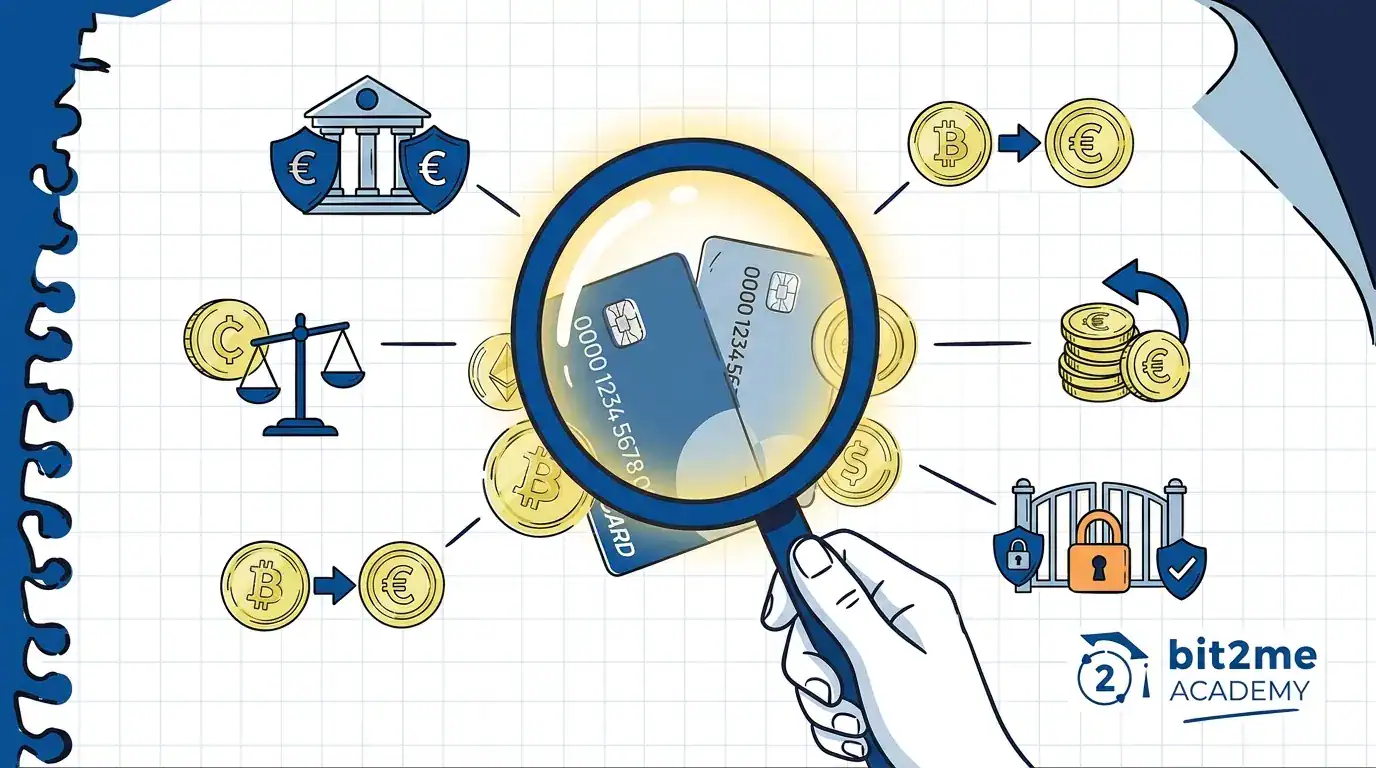
When you use a debit card linked to your assets, such as the Bit2Me With the card, a workflow invisible to you but very precise is activated. The merchant pays a commission for processing the payment (the well-known interchange fee). In the traditional model, this commission is split between the issuing bank, the network (Visa/Mastercard), and the processing entity.
In the token ecosystem, platforms sacrifice part of their margin or use reserve funds to "buy" user loyalty, returning a fraction of that transaction directly to their wallet.
The connection between commerce and your wallet
This way, you pay in euros at your local shop. The shopkeeper receives euros. But in milliseconds, the platform calculates the cashback percentage, acquires the corresponding cryptocurrency, and deposits it into your account. There's no friction. You don't need to know how to program a smart contract for this to happen; it simply occurs as you save the receipt to your wallet.
Bit2Me as a success story: The power of Bit2Me Card
In Spain, the undisputed leader in this service is Bit2Me. Their proposal with the Bit2Me Card is an example of how to organically integrate daily spending with blockchain infrastructure.
What's interesting here isn't just that they give you money back, but how they scale that benefit. It's not a "one-size-fits-all" model. Through their tiered system, if you own their native token (B2M), the cashback percentage increases.
This creates a virtuous cycle: you use the platform, hold its tokens, and then, every time you go to the supermarket or pay your phone bill, you recoup a larger portion of your spending. It's possibly the easiest way to enter the ecosystem for someone who fears volatility but wants to start experimenting with digital assets.
Advantages of receiving refunds in cryptocurrencies versus fiat money
Why would I prefer a token to a euro cent? Because of the asymmetry of risk and reward.
- Potential appreciation: If your bank gives you €1 back, that euro will always be €1 (or less, due to inflation). If you receive €1 in a solid digital asset, and that asset doubles in value in the next market cycle, your past cashback has just multiplied. Your coffee today could end up paying for dinner tomorrow.
- Immediate liquidity: Unlike airline or hotel loyalty points, these tokens are liquid. You can convert them to euros, exchange them for other assets, or use them to pay for your next purchase in seconds from your computer or mobile device.
Risks and fine print that no one tells you about
In any case, remember that cashback on digital assets isn't without its drawbacks. The most obvious is volatility. If the market falls by 20%, the value of your accumulated rewards will also fall.
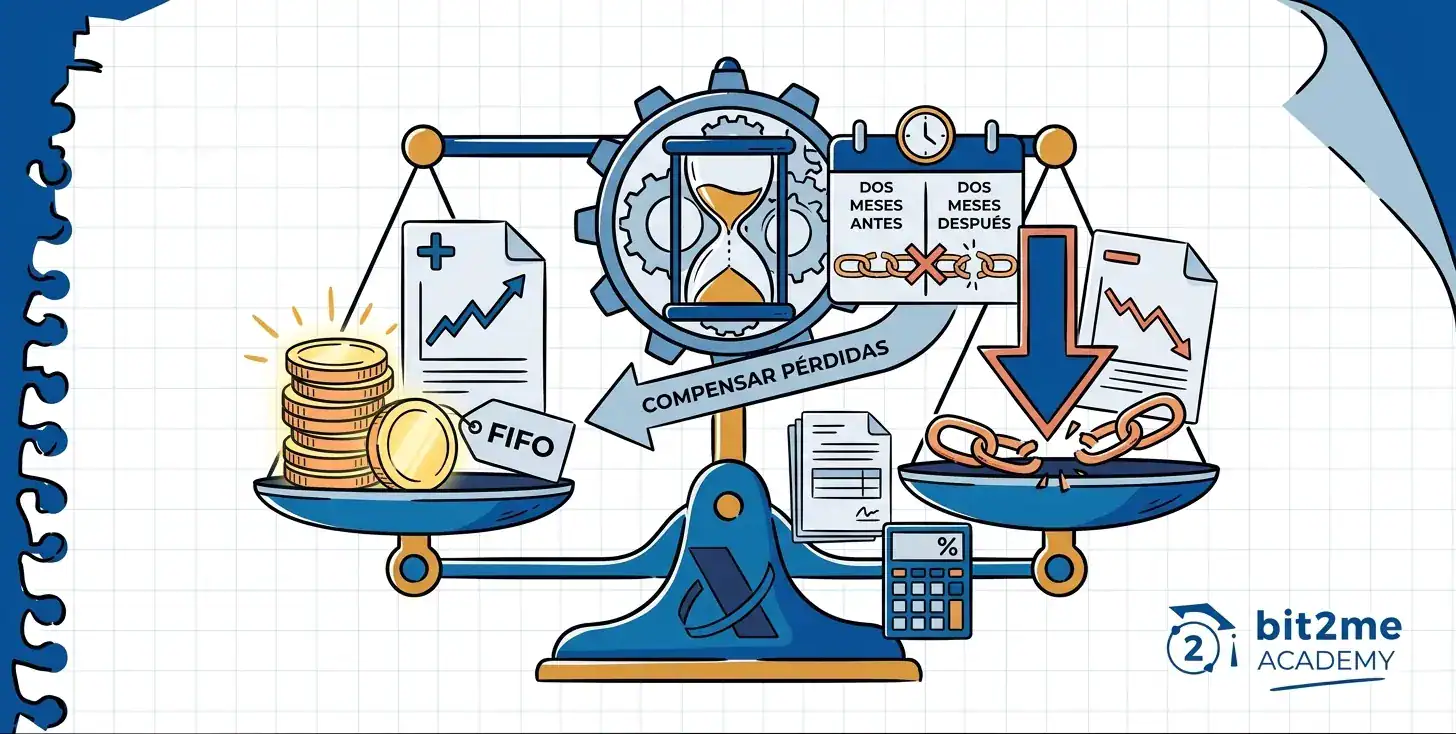
Furthermore, you should be aware of the tax implications in Spain: every time you convert those tokens into euros or use them to make purchases, you could trigger a tax event. It's nothing a good reporting tool can't handle, but it's important to be aware of it.
Is it really worth the effort? Absolutely, as long as you understand that cashback isn't a salary, but a financial optimization tool that provides a powerful advantage you can take advantage of.
 Author