Virtuals Protocol is an innovative project that is gaining notoriety for its ambitious proposal to integrate artificial intelligence (AI) into the Web3 ecosystem. But, What exactly is Virtuals Protocol and why should you pay attention to it?
The vision behind Virtuals Protocol
Virtuals Protocol is the fruit of the work of a team of developers passionate about the intersection between artificial intelligence and blockchain technology. This team, composed of Jansen Teng (co-founder and CEO), together with Prakash Somosundram and Wee Kee, who are experts in both areas, and who have created a protocol designed to facilitate the creation and management of decentralized AI agents.

But what does this mean in practice? Imagine a world where AI is not controlled by large corporations, but is accessible and customizable to everyone. This is the main goal of Virtuals Protocol. Thus, its main mission is to democratize access to AI. Artificial Intelligence, allowing users to create their own intelligent agents and deploy them in a variety of applications.
Instead of relying on centralized solutions, Virtuals Protocol seeks to build an ecosystem where AI agents are autonomous and transparent entities. This approach not only encourages innovation, but also empowers users, giving them full control over their creations. Furthermore, this decentralization eliminates censorship and allows agents to interact autonomously and without limitations.

Addressing challenges to unite AI and blockchain
To achieve this, the protocol seeks to address several key challenges in the field of AI. One of the main ones is the lack of transparency in current AI models. Algorithms often operate as black boxes, making it difficult to understand how they make decisions and therefore trust them. Virtuals Protocol, being based on the blockchain, provides greater transparency and traceability to agent interactions, generating greater trust and security. It also focuses on interoperability, allowing agents to AI agents created with Virtuals Protocol can communicate and interact with each other, and with other Web3 applications. This feature is essential to building a robust and diverse AI ecosystem.
Another crucial aspect is the customizability that Virtuals Protocol offers. Each user can train and modify AI agents to suit their specific needs. Whether you want a personal assistant with a unique personality, an agent to automate tasks, or a game partner with a sophisticated strategy, Virtuals Protocol offers you the tools to make it a reality. In this way, Virtuals Protocol seeks to empower individuals and communities, providing the tools necessary to build a future where AI is an ally, rather than a centralized force.
Virtuals Protocol Tokenomics: the fuel of innovation
Like any project in the crypto space, Virtuals Protocol features its own token, which serves as the fuel of the ecosystem. This token is not only a unit of value, but also plays a pivotal role in the functioning of the protocol. The project’s tokenomics are carefully designed to incentivize participation and value creation within the platform.
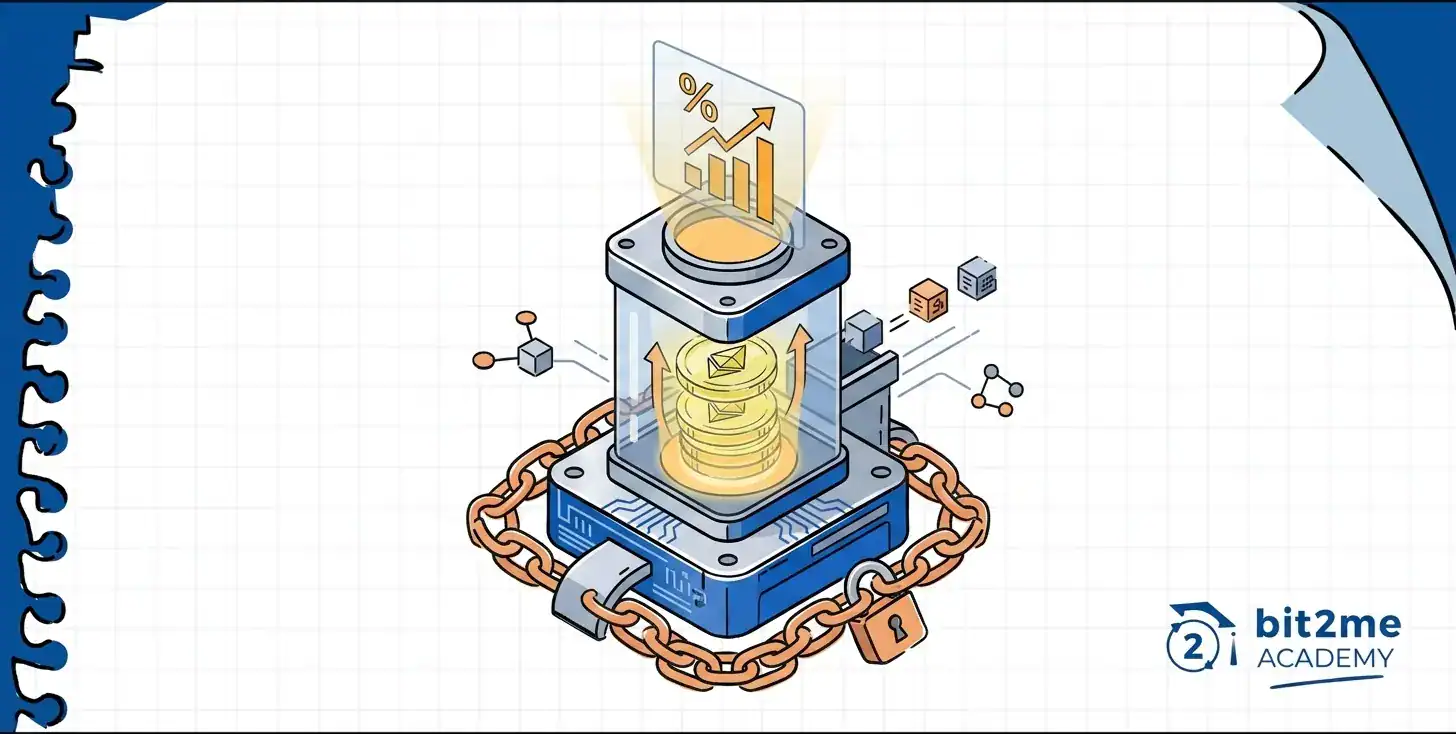
The native token of Virtuals Protocol, called CLUB, is used for various functions within the ecosystem. Firstly, it is used to pay for interaction with the protocol. For example, the creation of a new agent requires a certain amount of VIRTUAL tokens, which are used to establish the agent's liquidity pool. Due to the locked nature of these liquidity pools, this process creates a deflationary pressure on the VIRTUAL tokens, and will allow them to appreciate in value over time.
On the other hand, VIRTUAL will serve as a routing currency. This means that when there is demand for agent tokens, transactions are routed through the VIRTUAL token. This means that users must exchange their USDC (or other currencies) to VIRTUAL before purchasing any agent tokens. This mechanism constantly generates demand for the VIRTUAL token whenever agent tokens are purchased, similar to how ETH or SOL serve as the base currency in the Ethereum and Solana ecosystems, respectively.
Creating a market for AI Agents
On the other hand, VIRTUAL facilitates on-chain agent economics for agent developers. For example, VIRTUAL can be used for inference payments, where users pay for AI agent inferences on a per-use basis. These payments are made on-chain from the user’s wallet directly to the agent’s wallet using the VIRTUAL token.
VIRTUAL will also be used for revenue transmission by such agents and their developers. This means that the continuous transmission of on-chain payments in VIRTUAL tokens guarantees transparent and efficient revenue collection for AI agents and their developers.
Token issuance
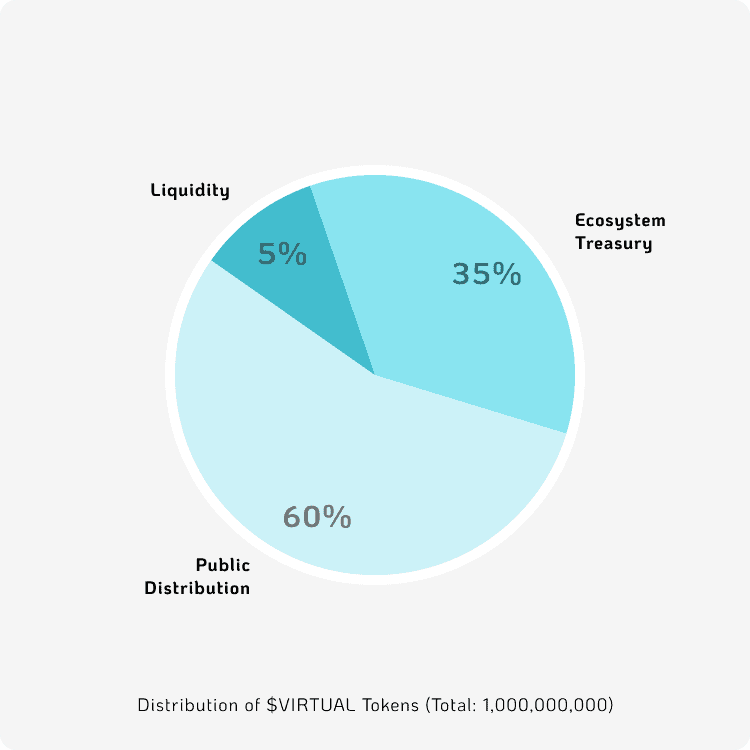
Of course, this is possible thanks to the issuance of said token, and there are many things to talk about here. The issuance of VIRTUAL tokens is carried out through a hybrid mechanism that combines an initial issuance with a participation reward model. A portion of the tokens (35% of the total) was distributed to the community treasury which is managed by the DAO of the project. This DAO will only be able to use 10% of the funds annually, so the vesting of these tokens will be completed in a maximum of 3 years. Secondly, we have a 5% liquidity issuance that will be used to boost the trading of the token on different platforms. And the rest of the tokens (60%) have been allocated for public distribution.
This distribution model is designed to balance initial value creation and long-term community engagement, which sends a clear message: Virtuals Protocol wants to build community power within the project and bring it to fruition alongside all those who believe in its vision.
A highly useful token
Thus the Token Utility VIRTUAL is essential for the functioning of the protocol, because in addition to the aforementioned uses, VIRTUAL allows users to rent AI agents to other developersLet's imagine that a user needs a specific agent for a specific task and doesn't have the knowledge to create one. In this case, they could pay a fee in VIRTUAL to rent another user's agent for a certain period of time. This mechanism creates a market for AI agents that allows users to access a wide variety of solutions, while rewarding developers for their work.
The tokenomics of Virtuals Protocol also includes a token burning mechanismA portion of transaction fees are used to buy back and burn VIRTUAL tokens. This mechanism reduces the total supply of tokens over time and helps maintain their value. This approach is designed to ensure the long-term economic health of the protocol and reward token holders for their loyalty and commitment.
Uses and practical examples: the power of AI Agents in the Web3
Now that we have explored the fundamentals and tokenomics of Virtuals Protocol, it is time to dive into its potential practical applications. How can we use this technology in the real world? The answer is that the possibilities are almost limitless. The protocol allows us to generate AI agents that can interact with each other, with other Web3 applications, and with the real world, opening up a universe of practical applications.
One of the most interesting uses is the creation of personalized virtual assistants. Imagine an assistant that not only answers your questions, but also learns from your preferences and adapts to your lifestyle. With Virtuals Protocol, you can train your own AI agent to help you with your daily tasks, remind you of your appointments, filter your email, and much more. This assistant, in addition to being intelligent, will be completely yours and you can customize it to your liking. In fact, on the main Virtuals Protocol website, we can already see several agents that have been deployed thanks to this protocol and which we can access from this interface.
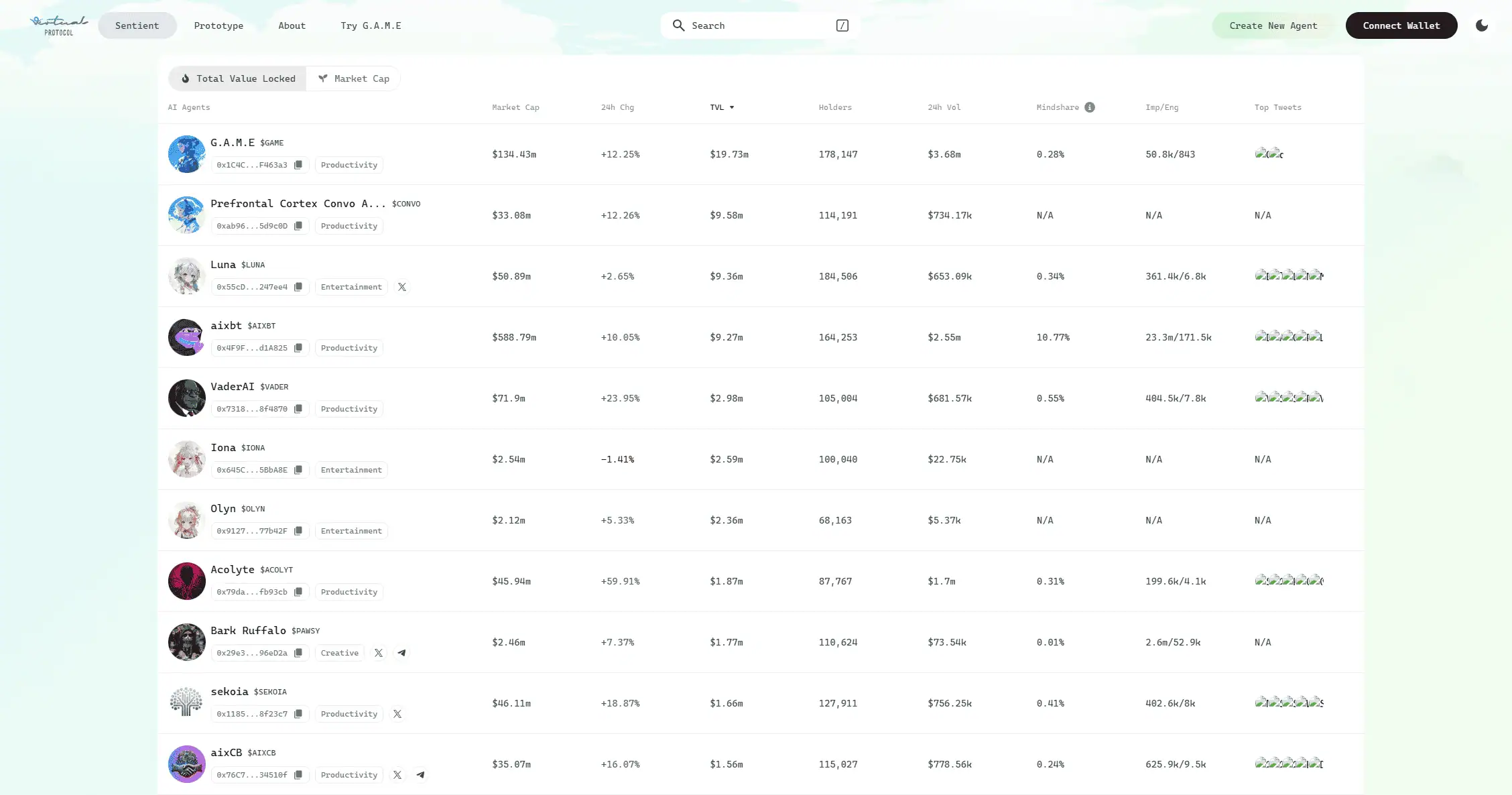
AI agents for all kinds of uses
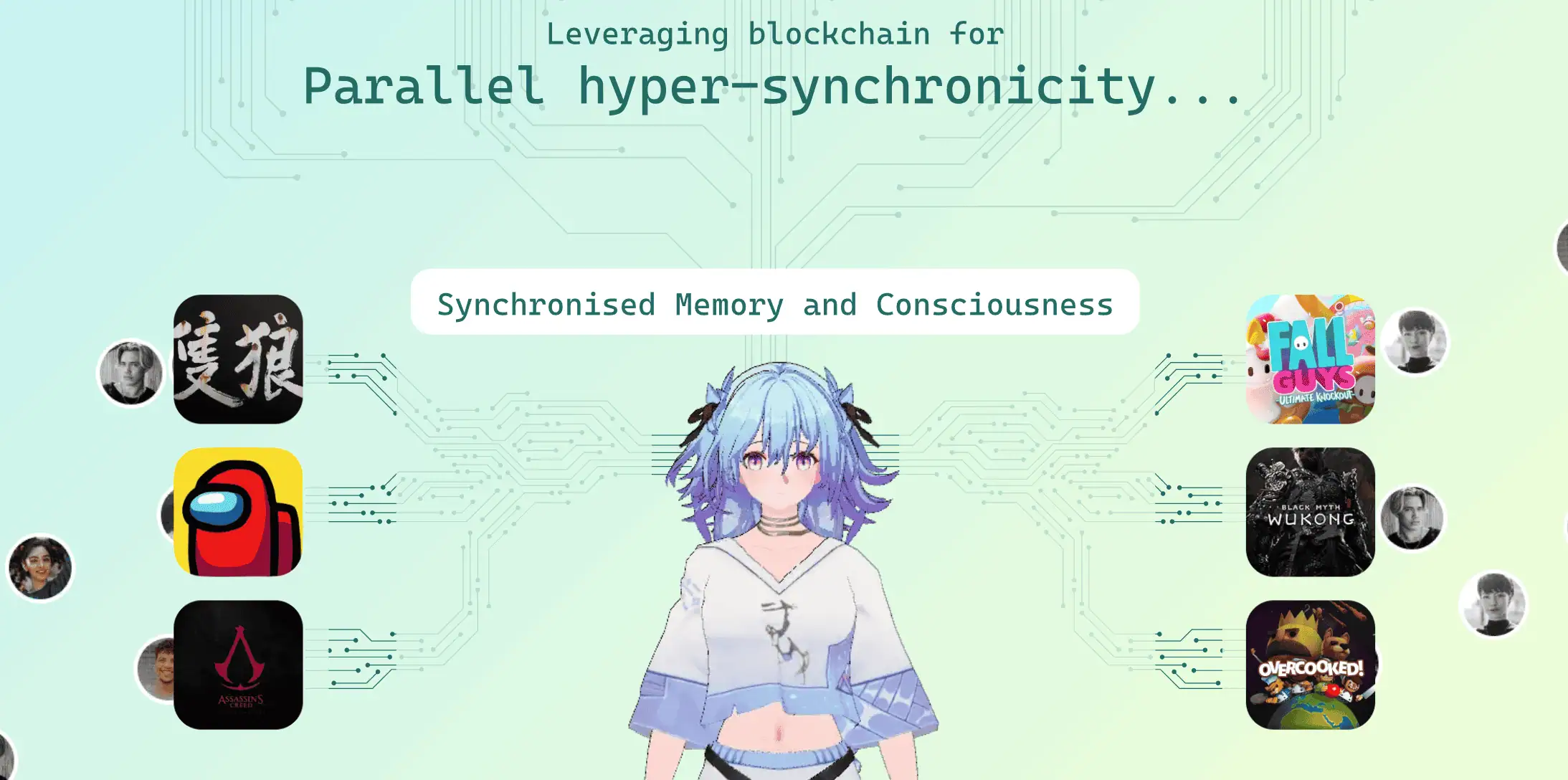
Another example is the creation of agents for Web3 games. Instead of playing against characters controlled by predictable algorithms, you could interact with AI characters that learn and evolve as they play. These agents could have their own personalities, strategies, and motivations, making games much more immersive and challenging. Integrating AI agents into Web3 games could revolutionize the way we interact with the world of digital entertainment.
Furthermore, Virtuals Protocol can be used to create agents for trading and investing. An AI agent could analyze market data in real-time and make buy or sell decisions based on a set of predefined parameters. Not only could this agent help you make money, but it could also reduce the stress and uncertainty associated with investing. These agents could automate tasks, manage risks, and execute trades without the need for human intervention.
In the field of education, Virtuals Protocol can be used to create personalized tutors. An AI agent could adapt to each student’s individual needs, offering them study material tailored to their level and answering their questions in a personalized way. This virtual tutor could not only improve the quality of education, but could also make it more accessible to everyone. AI agents can provide individualized attention and personalized support, adapting to each student’s pace and learning style.
Finally, Virtuals Protocol can be used to automate tasks in the real world. Imagine an AI agent that manages the operation of a smart home, controlling the temperature, lights, and security, and alerting you if there are any anomalies. Not only could this agent make your life more comfortable, but it could also help you save energy and reduce your carbon footprint. These agents can interact with sensors, actuators, and other devices to automate processes, improve efficiency, and reduce the cost of operations.
The impact of decentralized AI
The emergence of Virtuals Protocol is in any case the result of a series of trends and challenges in the field of AI. In recent years, we have seen an increase in the capacity of AI to perform complex tasks, but we have also observed that this capacity is concentrated in the hands of a few technology companies. This centralization of AI raises a number of problems, such as lack of transparency, censorship and the risk of abuse. Virtuals Protocol emerges as a response to these problems, proposing a decentralized and democratized alternative.
One of the main reasons for the emergence of Virtuals Protocol is the need for greater transparency and control over AI models. Current AI algorithms are often opaque, making it difficult to understand how they make decisions and therefore trust them. Blockchain technology, on which Virtuals Protocol is based, provides greater traceability and transparency to agent interactions, which generates greater trust in the community.
Furthermore, the need for greater AI customization has driven the creation of this protocol. Centralized AI models are often generic and do not adapt to individual user needs. Virtuals Protocol allows each user to train and modify AI agents to suit their specific needs, providing a higher level of control and customization. The ability to fine-tune AI algorithms to specific needs is one of the key advantages of decentralization.
Driving AI innovation and diversification in Web3
At this point, it is clear that the development of Virtuals Protocol will have significant implications for the AI sector and the crypto ecosystem. On the one hand, it is expected to boost innovation in the field of artificial intelligence, encouraging the creation of more diverse and sophisticated agents. By making AI more accessible and customizable, Virtuals Protocol could accelerate the development of new applications and solutions.
The protocol is also expected to have a significant impact on Web3. The integration of AI agents into decentralized applications will open up a world of new possibilities for interaction between users, applications, and the real world. From gaming to decentralized finance, AI could transform the way we interact with blockchain technology.
Furthermore, Virtuals Protocol could contribute to further democratization of technology. By allowing anyone to create and manage AI agents, the protocol could empower users and reduce the concentration of technological power. This democratization can lead to a more diverse and inclusive ecosystem in the artificial intelligence space.
Finally, Virtuals Protocol could generate new business opportunities for developers. Creators of AI agents could earn income for their work, incentivizing innovation and ecosystem growth. By providing tools and platforms for AI development, Virtuals Protocol could contribute to the creation of a new digital economy.
It starts at Bit2Me Jump into the world of cryptocurrencies with a head start. Sign up easily and get €15 FREE on your first purchase with this link. Don't wait any longer to join the crypto revolution! Join Now
 Author