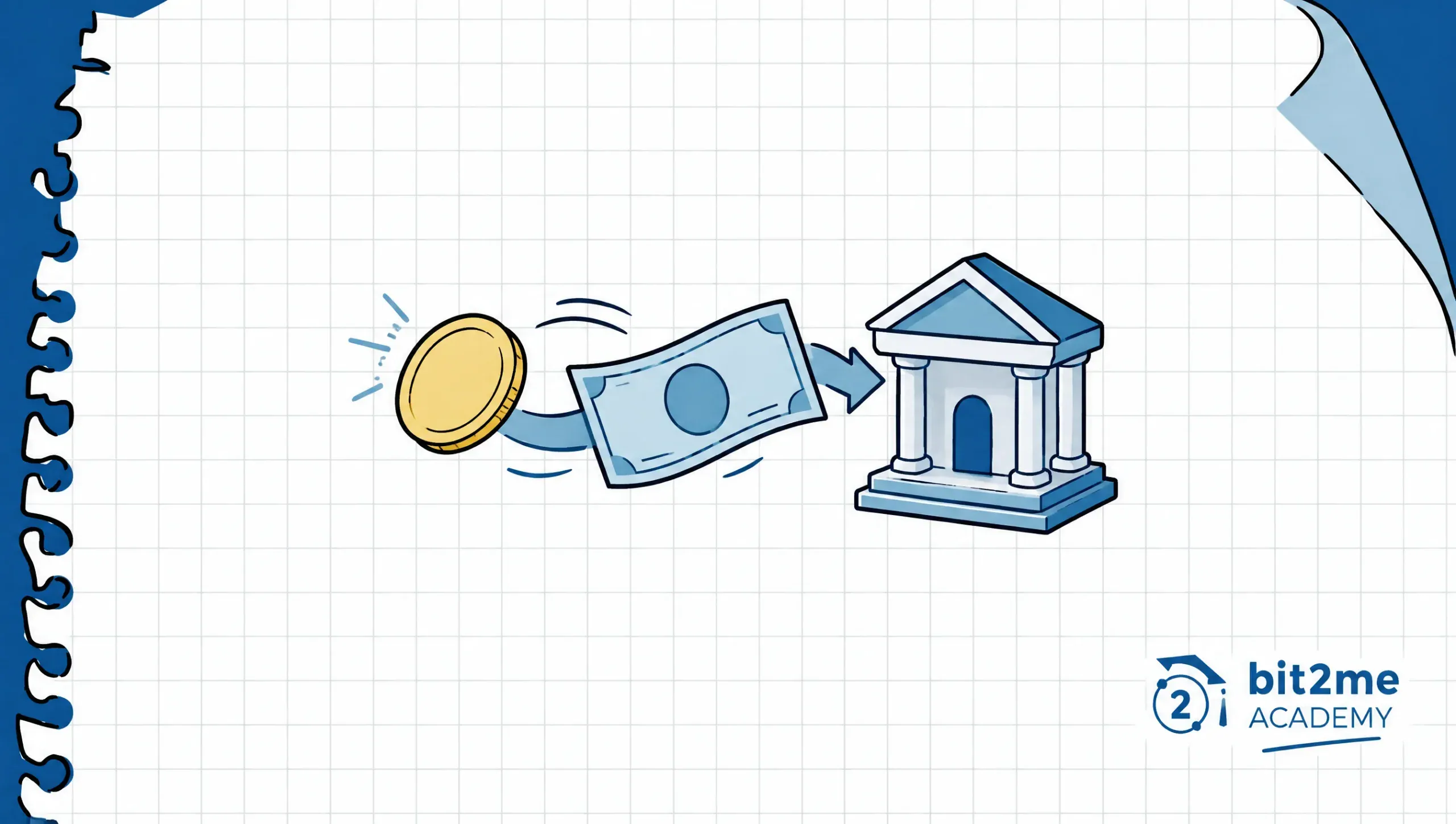
- Web3 Payment Gateway: It is a leading platform that allows businesses to accept cryptocurrency payments and receive the money in fiat currency (euros, dollars), eliminating the risk of volatility for the seller.
- Consumer protection: Unlike direct Bitcoin transfers, xMoney offers a dispute and buyer protection system, similar to PayPal, which builds trust in e-commerce.
- Integration with MultiversX: Following Elrond's (now MultiversX) acquisition of Utrust, xMoney has become a central part of its digital financial ecosystem, leveraging its high scalability.
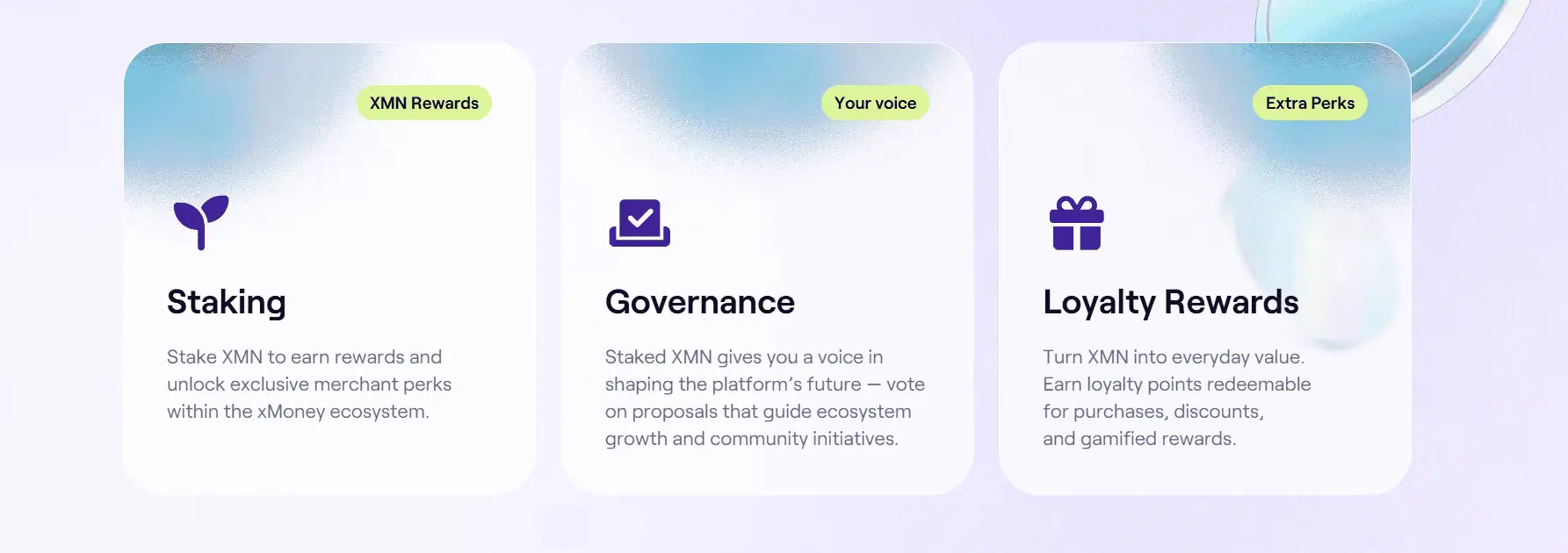
- Utility of the XMN Token: The native token is used to obtain discounts on transaction fees, staking, and participation in network governance, incentivizing its use for both customers and merchants.
Imagine a payment infrastructure that combines the speed of a modern network, the flexibility of smart contracts designed for the real economy, and a token that coordinates both incentives and community decisions. That's the promise xMoney holds: a blockchain project built on Sui, designed to accelerate global payments and enable businesses to operate faster, smarter, and more securely.
To achieve this, at the heart of this ecosystem is $XMN, a MiCA-compatible token that functions as the economic and governance engine of the ecosystem, seeking to integrate functionalities ranging from instant transaction processing to on-chain governance tools that empower users and companies.
The story behind the development of xMoney ($XMN)
To fully understand the scope of xMoney, it's crucial to look at its origins. First, the team behind the project, led by xMoney Labs AG (a company registered in Liechtenstein), and its parent company, the XMG Foundation, has been patiently building the infrastructure to bridge traditional finance with the world of blockchain.
The development of the project, which began in 2023, has been a path of constant evolution. By choosing Sui, xMoney seeks to leverage the liquidity, scalability, and momentum of a rapidly growing ecosystem to accelerate its reach. This decision is a reflection of the company's vision of not being limited to a single blockchain, but rather being present wherever merchants and users are. Furthermore, the foundation of the project was initially built on MultiverseX, and while they continue to operate and support that ecosystem, expanding into Sui is a logical next step in achieving global scalability and resilience.
The strategic evolution: From MultiversX to Sui
Although xMoney began its development rooted in the MultiversX ecosystem, the project has evolved to ensure global scalability. A key milestone in 2025 was its strategic expansion to the Sui blockchain. This decision, backed by a $21,5 million funding round led by the Sui Foundation, allows xMoney to leverage:
- Parallel execution: To process massive transactions without bottlenecks.
- Low latency: Achieving near-instant settlements.
- Object-oriented model: For safer and more composable asset management.
Thanks to this, xMoney's infrastructure seeks to transcend the limitations of a single chain, operating wherever merchants and users need it.
How does xMoney work and what new features does it bring to the ecosystem?
As we already mentioned, xMoney relies on Sui to exploit technical features that are especially attractive for payments: efficient parallel execution, low latency, and an object model that facilitates asset composition and secure state management. On that basis, xMoney articulates a stack that combines a native $XMN token with smart contracts in Move focused on business payments, liquidity routes, on-chain reconciliation layer, and governance tools that enable coordinated updates and decentralized decisions.
Technically, xMoney's proposal contemplates the issuance of $XMN as a fungible asset that acts on three levels: A medium of exchange for fees and micropayments within the ecosystem, an incentive for liquidity providers and stakers, and a governance instrument for proposing and voting on protocol improvements. At the execution layer, xMoney leverages Sui's object model to represent accounts, balances, payment orders, and permissions, enabling atomic and composable operations without the bottleneck of a single transaction order. This means a business can orchestrate multiple operations with local integrity assurance and reduced latency—ideal for mass payments, intraday settlements, and programmable financial reconciliation.
Smart payments
Among the most relevant innovations that xMoney brings to the ecosystem is the integration of "smart payments" that allow transfers to be conditioned to off-chain events verified through oracles, or to on-chain conditions such as compliance checkpoints. KYC/AMLBy combining optimized liquidity routes with non-custodial custody tools, xMoney makes it easy for a business to manage flows across multiple currencies (tokenized fiat, stablecoins and $XMN) with programmable conversions and slippage minimization.
Furthermore, governance through $XMN opens the door to updatable economic parameters, such as fees, provider commissions, and eligibility criteria for nodes or validators of auxiliary services. All of this seeks to reduce friction, improve traceability, and deliver an experience similar to that of traditional payment systems, but with the advantages of transparency and blockchain interoperability.
A solution for frictionless global payments
With all this technology, xMoney seeks to solve a well-known problem in the global payments industry: the friction associated with global payments. We're talking about addressing settlement delays, intermediation costs, lack of interoperability between fiat and crypto, and difficulties integrating regulatory controls without sacrificing speed or business privacy.
Traditionally, companies that handle international transactions face settlement times ranging from hours to days, the need for banking correspondents, and manual reconciliation processes, all of which increase tied up capital and operational risk. xMoney seeks to replace part of that stack with a programmable layer that accelerates settlement, automates reconciliations, and reduces intermediaries through contracts that execute predefined conditions.
Furthermore, xMoney attempts to reconcile two worlds: the business need for controls and compliance, and the advantages of decentralized systems. By enabling conditional payments and on-chain visibility with selective privacy mechanisms, businesses can demonstrate compliance to auditors and regulators without exposing sensitive data publicly. This is especially useful for international trade, remittances, and marketplace platforms that require rapid settlements between multiple parties.
The xMoney product ecosystem
Thanks to this, xMoney is not just a payment gateway, but a complete financial suite that includes:
- Fiat and traditional solutions: It operates as a licensed Electronic Money Institution (EMI), allowing the regulated processing of fiat money.
- Crypto payment gateways: APIs and billing tools for accepting cryptocurrencies.
- Card issuance: Debit card programs (Visa/Mastercard) that connect fiat and crypto balances, including the first card issued on the Sui network.
- MiCA Stablecoins: Infrastructure compatible with stablecoins pegged to the Euro, Dollar and RON.
- Loyalty programs: Token-based reward systems to incentivize users.
$XMN Tokenomics: The Engine of the Ecosystem
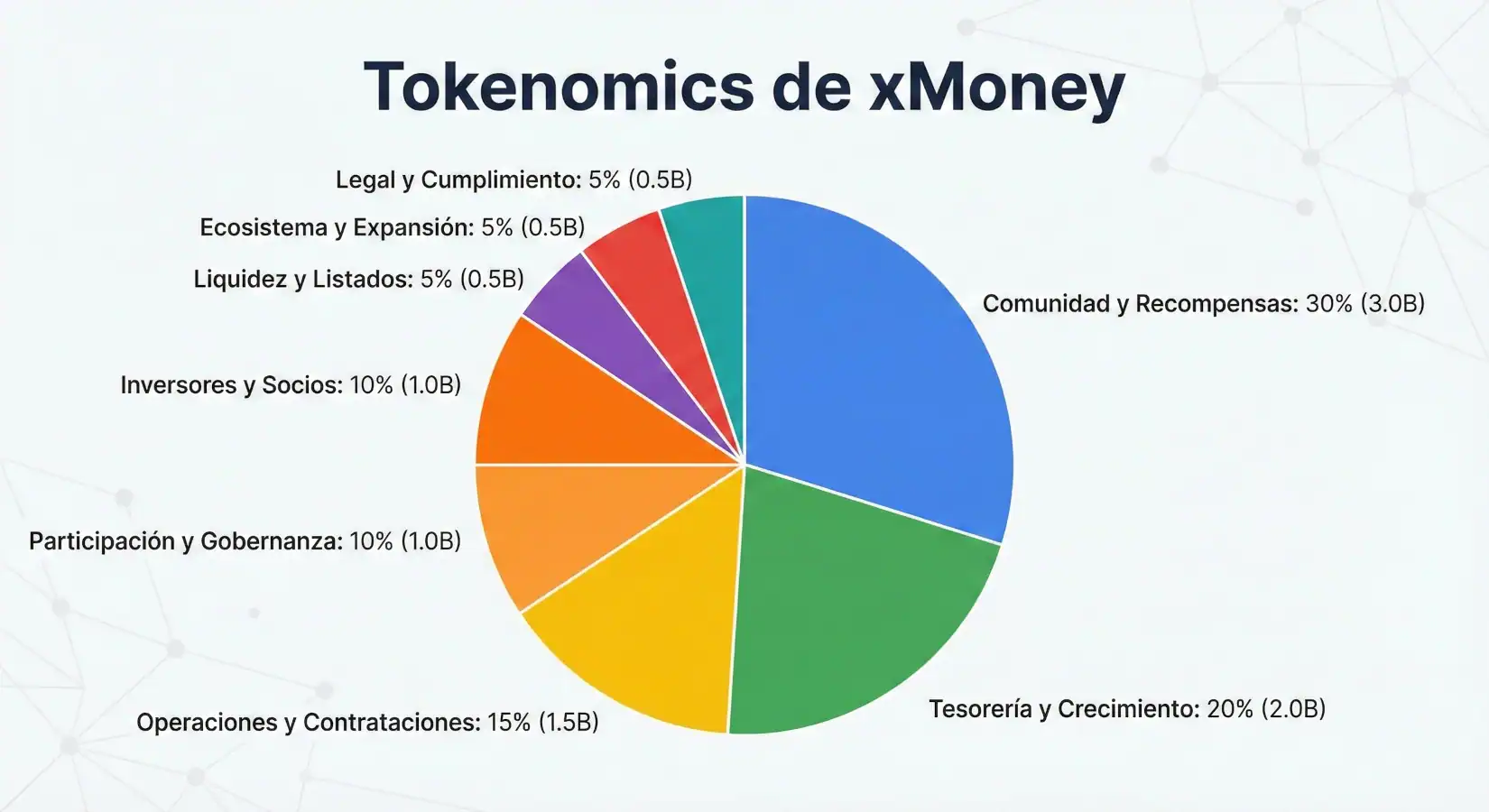
This brings us to the economic structure of the $XMN token, which is a key part of the project's long-term vision. With a total and maximum supply of 10 billion tokens, $XMN is designed to be the driving force of the ecosystem. The issuance of new tokens beyond this limit can only occur if deemed necessary by a collective vote of XMN token holders. At the time of listing, the initial circulating supply is estimated to be approximately 650 million tokens.
In any case, the initial allocation of the total supply is carefully structured to ensure balanced and sustainable development of the ecosystem. The distribution percentages are as follows:
| Category (Bucket) | % of Total Supply | Description / Purpose | Vesting / Unlocking and Conditions |
|---|---|---|---|
| Community and Rewards | 30% (3.0B) | It drives adoption and usage growth. It's used for user rewards (cashback, loyalty programs), merchant incentives, marketing and community campaigns, developer grants, and hackathons. | Vesting for 7 years, starting at launch. 5% unlocked in T+6 months, then linear semi-annual unlocks for 6.5 years. |
| Staking and Governance | 10% (1.0B) | It encourages staking and participation in governance to strengthen network security and reward active contributors. | Vesting for 10 years, starting at launch. Unlocks are proportional to staking activity and APR, decreasing annually. |
| Operations and Contracting | 15% (1.5B) | It supports operational needs and key recruitment to attract global talent. | Cliff of 12 months, then monthly linear vesting for 36 months (48 months total). |
| Investors and Partners | 10% (1.0B) | Reserved for strategic ecosystem partners. Promotes long-term participation rather than short-term investment. | Cliff of 12 months, then monthly linear vesting for 36 months (48 months total). |
| Treasury and Growth | 20% (2.0B) | Reserved for future expansion, product development, international partnerships and infrastructure. | 10-year vesting, with quarterly unlocks throughout the period. |
| Liquidity and Listings | 5% (0.5B) | It provides liquidity in exchanges, supports market-making, and stabilizes initial trading conditions. | 40% unlocked at launch, the remaining 60% linearly quarterly for 2 years. |
| Ecosystem and Expansion | 5% (0.5B) | It funds cross-chain integrations, protocol alliances, and incentives for ecosystem participants. | Vesting of 3 to 5 years, cliff of 6 months, semi-annual unlocks linked to milestones. |
| Legal and Compliance | 5% (0.5B) | It covers compliance, legal advice, and audits to ensure alignment with MiCA. | 36-month vesting with conditional unlocks based on regulatory needs. |
A multifaceted token
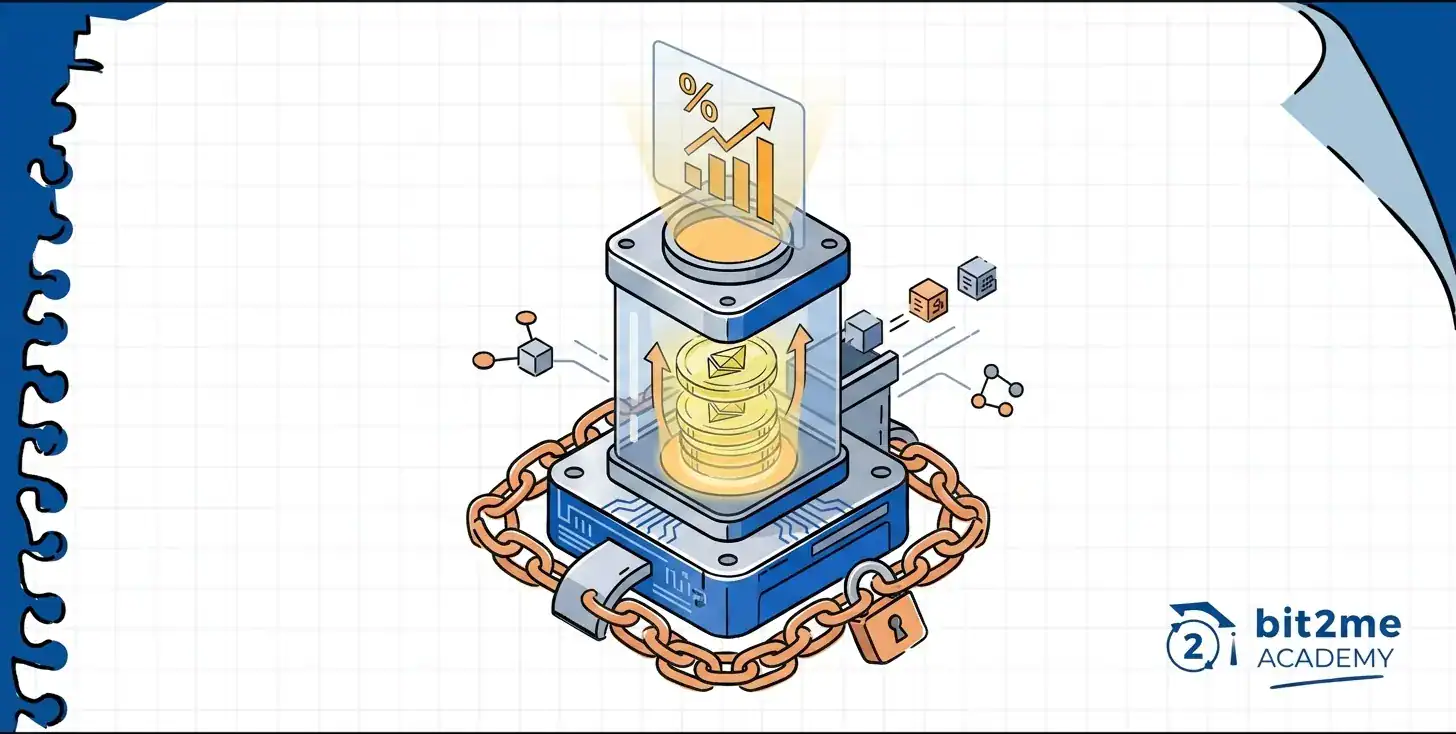
This arrangement shows that the $XMN token functions in a multifaceted way within xMoney. First, as a utility token, $XMN allows merchants to benefit from lower fees and buyers to enjoy improved loyalty rewards. It also provides early access to new features within the ecosystem. Second, as a governance token, staking $XMN grants holders the right to vote on select proposals.
In addition, $XMN has a vesting structure for the team and investors, including a 12-month lockup period and a 36-month vesting period. Along with the distribution of treasury funds and ecosystem growth over 10 years, it demonstrates a strong commitment to long-term alignment and protecting community interests.
And here it's important to highlight one point: $XMN's tokenomic mechanisms are designed to strike a balance between efficiency and security. First, because a purely token-power model could favor large holders, which is problematic in infrastructures that must preserve fairness between participants. Furthermore, $XMN's tokenomics seeks to integrate long-term aligned incentives. This can be clearly seen in the vesting process described above.
MiCA compliance and Blockchain technology: The new xMoney standard
Unlike most utility tokens in the crypto ecosystem, which often have to adapt to regulations after the fact, $XMN was designed from its inception to fully align with the regulatory framework. MiCA (Markets in Crypto-Assets) of the European Union.
This approach of "compliance by design" This makes $XMN one of the first digital assets in Europe explicitly built to offer long-term regulatory certainty. This legal foundation provides crucial strategic advantages for the ecosystem:
- Institutional trust: Banks, payment processors, and exchanges can integrate and operate with $XMN, drastically reducing legal uncertainty and compliance risk.
- Protection and transparency: By complying with MiCA's strict issuance obligations, xMoney ensures high standards of transparency and protection for token investors and users.
- Bridge to traditional banking: Regulatory clarity removes barriers that have historically prevented traditional financial institutions from collaborating with crypto projects, thus facilitating wider adoption.
In a world where financial regulation is tightening, xMoney isn't playing catch-up; it's positioning itself ahead of the requirements, offering the secure and legal infrastructure that large companies need to enter the digital economy.
 Certificate
Introductory course to DeFi
Medium levelTime to update. Traditional finance has changed, discover the revolutionary ecosystem of decentralized finance (DeFi).
A bridge for two financial worlds
At its core, xMoney represents the culmination of an effort to create a solid and secure bridge between the traditional financial system and the innovative world of decentralized finance. Far from being a simple payment processor, the platform has reinvented itself as a critical infrastructure that uses blockchain technology to address the weaknesses of existing systems: slowness, inefficiency, and fragmentation. Its adoption of the $XMN token is not a cosmetic change, but a statement of intent: to build a network where governance, utility, and growth are intrinsically linked to the community that sustains it.
By aligning its strategy with emerging regulations like MiCA and expanding into high-performing ecosystems like Sui, xMoney isn't just preparing for the future—it's building it. Its vision is a world where cross-border payments are as simple as sending a text message and where blockchain technology serves as a tool for global financial inclusion. With a solid foundation, a clear focus on utility, and a commitment to transparency, xMoney is leading the way to a new era of payments, where speed and security meet decentralization to create a truly global financial solution.
 Author