Essential Points
- The key is the key: A wallet is essentially a cryptographic key manager; whoever owns the private key has absolute control over the funds on the network.
- Layered security: The choice between a Hot Wallet (comfort and speed) and a Cold Wallet (maximum offline security) should be based on the frequency of use and the total amount of investment.
- Financial sovereignty: Non-custodial wallets return power to the user, eliminating banking intermediaries, but transferring all custody responsibility to the individual.
- Interoperability: Modern standards allow a single seed phrase to retrieve assets across multiple networks, unifying the user experience in the DeFi ecosystem.
Uone of the most important elements in the cryptographic world and of tecnología blockchain is walletsUsing these tools is essential for managing our crypto assets. Therefore, choosing the right one that meets our needs is just as important as having one at all.
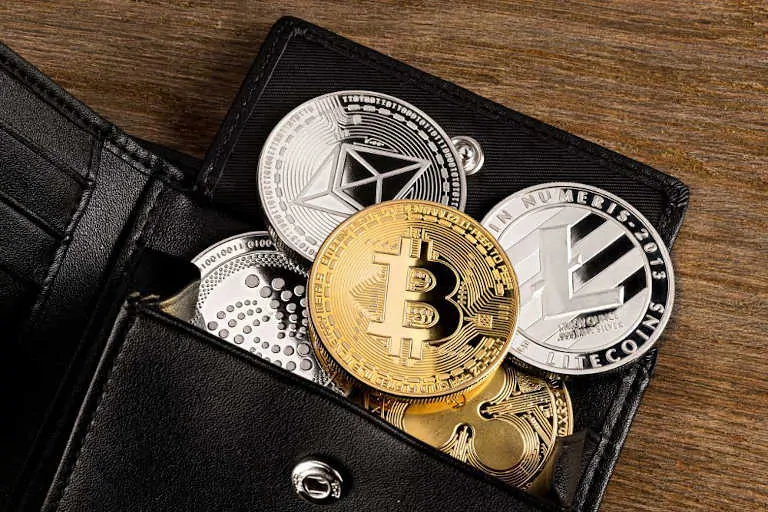
The term wallet refers to a virtual wallet, virtual wallet or virtual coin purse where we can manage our crypto assets. It's a software or hardware designed exclusively to store and manage the public keys y private keys of our crypto assets.

How do cryptocurrency wallets work?
As we already mentioned, cryptocurrency wallets are one of the most important and indispensable elements when trading cryptocurrencies. This is because They are the ones that allow us to send or receive payments in crypto assets.
Unlike the traditional financial system, Bitcoin and others cryptoassets They are entirely digital currencies that do not exist in the physical world and that function based on cryptographyTherefore, wallet design is vital for operating and managing our funds. And although the term "wallet" may seem similar to what we use to store physical money, in the case of cryptocurrencies, what is actually stored in wallets are the public and private keys.
Cryptocurrencies as such do not exist as currencies, but rather as transaction records contained within a blockchain that is operated by nodes. interconnected around the world. Therefore, the public keys and, especially, the private keys within a wallet are what give us ownership and rights over the crypto assets transferred to a particular address. Let's look at this in more detail:
- La public key It is similar to a bank account number. We can deliver it to anyone to send us money, without the risk that they can withdraw our funds. Through the public key, addresses are generated to receive, consult and view the status of our funds.
- La private key It functions like a key, a PIN or password that we shouldn't reveal to anyone, as it grants us the right to spend the crypto assets contained in an address. Thus, the owner of the private key will own the funds and have complete control over them.
How wallet security works
Wallets or purses use advanced blockchain encryption techniques to grant and guarantee total security to usersIn this way, the wallet can store, send, and receive crypto assets without significant risk.
At the time of setting up a wallet, the first thing is to create a private key using a secure algorithm. For example, through the algorithm ECDSA using the elliptic curve secp256k1. Or you can also use the algorithm EdDSA. In either case the goal is to provide a high level of security. This is because both methods allow the creation of almost infinite combinations and with a high degree of difficulty. This makes them practically impossible to guess or to be attacked by force.
After the generation of the private key, we proceed to the creation of the public key, which is mathematically related to the first one.And from the public key, the addresses where we can receive crypto assets are generated. However, it's important to note that although the public key is generated and linked to the private key, the reverse process is not possible. In other words, we cannot deduce the private key from the public key, since the algorithm used for its creation is unidirectional.
Deterministic wallets, more security and functionality
Likewise, there are deterministic wallets (HD wallets) that when you configure them for the first time, they generate seed from which all keys and addresses are generated. They will later be used to restore and recover the wallet and our funds in case of damage or loss of the equipment. These seeds are a type of code represented by mnemonics, usually in English. This is intended to make backups easier.
Interestingly, it's important to note that the public and private keys generated in a wallet are not linked to the cryptocurrency's protocol. Instead, they are stored within the hardware that operates the wallet and never leave the device. However, the level of security provided by a wallet will depend on the type being used. hardware wallet, paper wallet, light wallets, desktop software, tablets o smartphone, or online.
What are cryptocurrency wallets used for?
Because Bitcoin and other crypto-asset systems are completely decentralized, there is no single entity or body that controls them. That is why wallets play a very important role in this ecosystem. They are a basic piece of infrastructure that allows us to operate with digital assets. Through them, we can view and check our balances, as well as the transactions made and received. They also allow us to operate our funds with absolute control over them. We do not need the permission or authorization of any third party to perform a transaction.
In addition to providing us with security and confidence to carry out our operations, wallets also allow us to sign transactions without the need for private keys to leave the device. When we send a shipment to a person, we are transmitting a value in the form of a transaction. Therefore, we are transferring ownership of a certain amount of money to that person. In order for the network to confirm the transfer and the recipient can use the funds, a digital signature is required. Thus it will be verified that the person who performs the operation owns the funds and not a third party.
Use cases for a cryptocurrency wallet
Now, you might ask yourself What use cases do wallets actually have? Well, let's take a closer look at this utility with two simple examples:
Example 1: Paying at a cafe with Bitcoin Cash (BCH)
Maria walks into her favorite coffee shop that accepts Bitcoin Cash payments. She opens her BCH wallet and scans the QR code at the register to pay, enters the corresponding amount in BCH, and confirms the transaction.
In seconds, the transaction is completed, and Maria receives a digital receipt. The café owner automatically receives the funds in their BCH wallet and can withdraw or hold the cryptocurrency as they prefer. This way, Maria pays quickly without using cash or a traditional card.
Example 2: Buying an electronic device with USDC
Carlos decides to buy a new laptop from an online store that accepts USDC (a dollar-pegged stablecoin). In your USDC wallet, you enter the required purchase amount, confirm the transaction, and send the funds to the address provided by the seller.
Within minutes, the payment platform confirms the transfer and authorizes the purchase. Carlos receives his confirmation by email and receives his electronic device at home, all digitally and securely thanks to the use of USDC.
Comparison with platforms such as Google Pay or Apple Pay
Looking at the examples above, we can compare them with platforms like Google Pay and Apple Pay. In both cases, our participants, María and Carlos, were able to make their payments quickly, privately, and without complications.
But the best part is that they didn't have to use a centralized platform with all sorts of controls and usage restrictions, such as regionalized purchases. After all, you can pay with cryptocurrencies not only where you live, but internationally, something that Google Pay and Apple Pay don't offer.
How to choose a wallet or purse
Before using a wallet for our crypto assets, it's essential to understand the types available on the market. We should examine the advantages and disadvantages of each to determine which best suits our needs.
With the creation of Bitcoin and subsequently the development of many others cryptoassetsThe need arose to have a wallet that would allow us to operate digital money. And to choose the one that best suits us, it is necessary to study the available projects. The first of these developments led to the creation of the full wallets or full clientsThese are the most complex wallets and also some of the most secure in the world of digital assets.
cold wallets, type hardware or role in These are undoubtedly the ones that provide the highest level of security when it comes to protecting our funds. Since they operate offline, there is no risk of them being hacked or compromised. This makes them ideal and preferred by many for depositing large sums of money. The best-known hardware wallets are the Trezor and LedgerChoose the one that best suits your security and budget needs. Meanwhile, the hot wallets, Such as desktop, tablet o smartphone They are better for performing daily operations. However, because they are always connected to the blockchain, and therefore to the internet, they are more susceptible to cyberattacks.
Bit2Me Wallet, an easy and simple multi-currency wallet to use
From Bit2Me We strive to provide all our users with the tools they need to manage their crypto assets with complete freedom. That's why we've designed Bit2Me Wallet, a powerful web wallet that you can use from anywhere in the world. With support for more than 400 crypto assets, Bit2Me Wallet lets you manage your crypto asset portfolio smoothly.
How to install Bit2Me Wallet?
And the best part is that installing Bit2Me Wallet is very simple. All you have to do is go to the app store of Google Play (for Android) or Apple Store (if you have an iPhone) and from there, download the wallet for your smartphone.
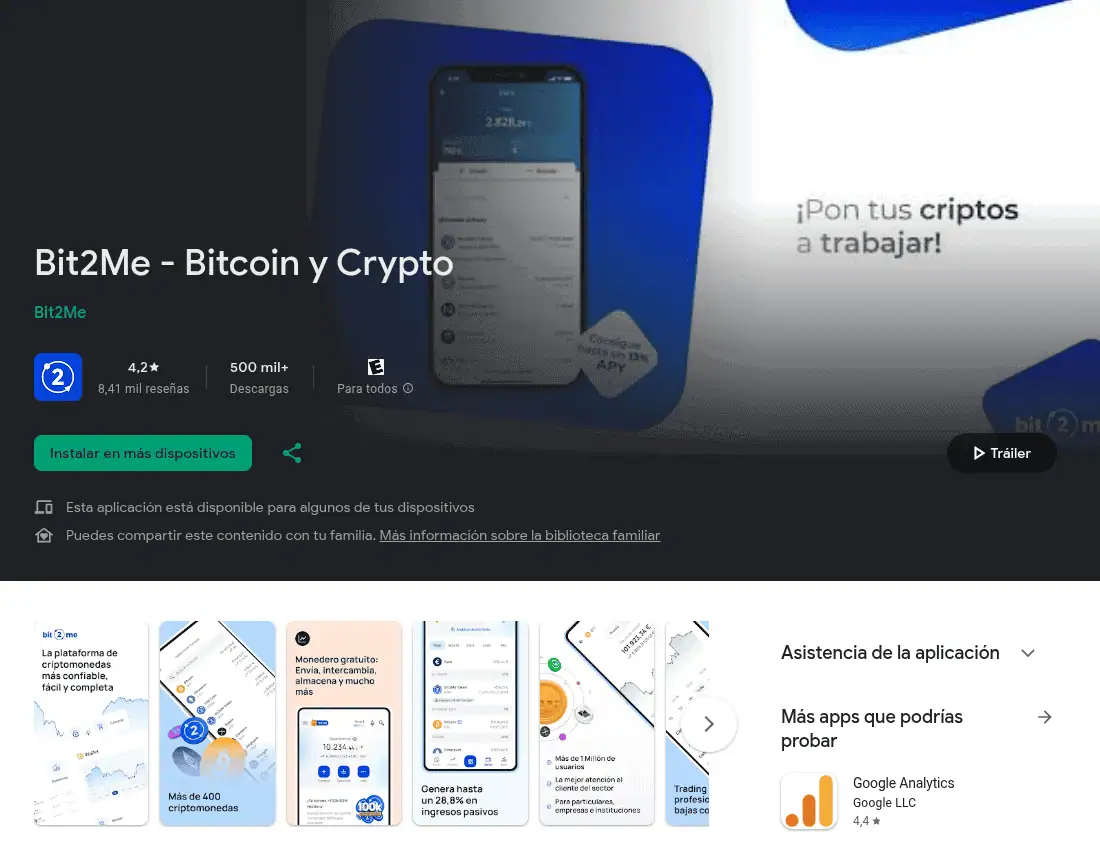
Once you start downloading the wallet, all you need to do is the registration process in Bit2Me And once completed, you can make your first purchase of crypto assets, and at the same time, have the ability to use it to pay for any service you want using crypto assets.
FAQ – Cryptocurrency Wallets

 Author