Essential Points
- Ethereum staking involves making your ETH available to the network to help validate blocks and receive rewards in return.
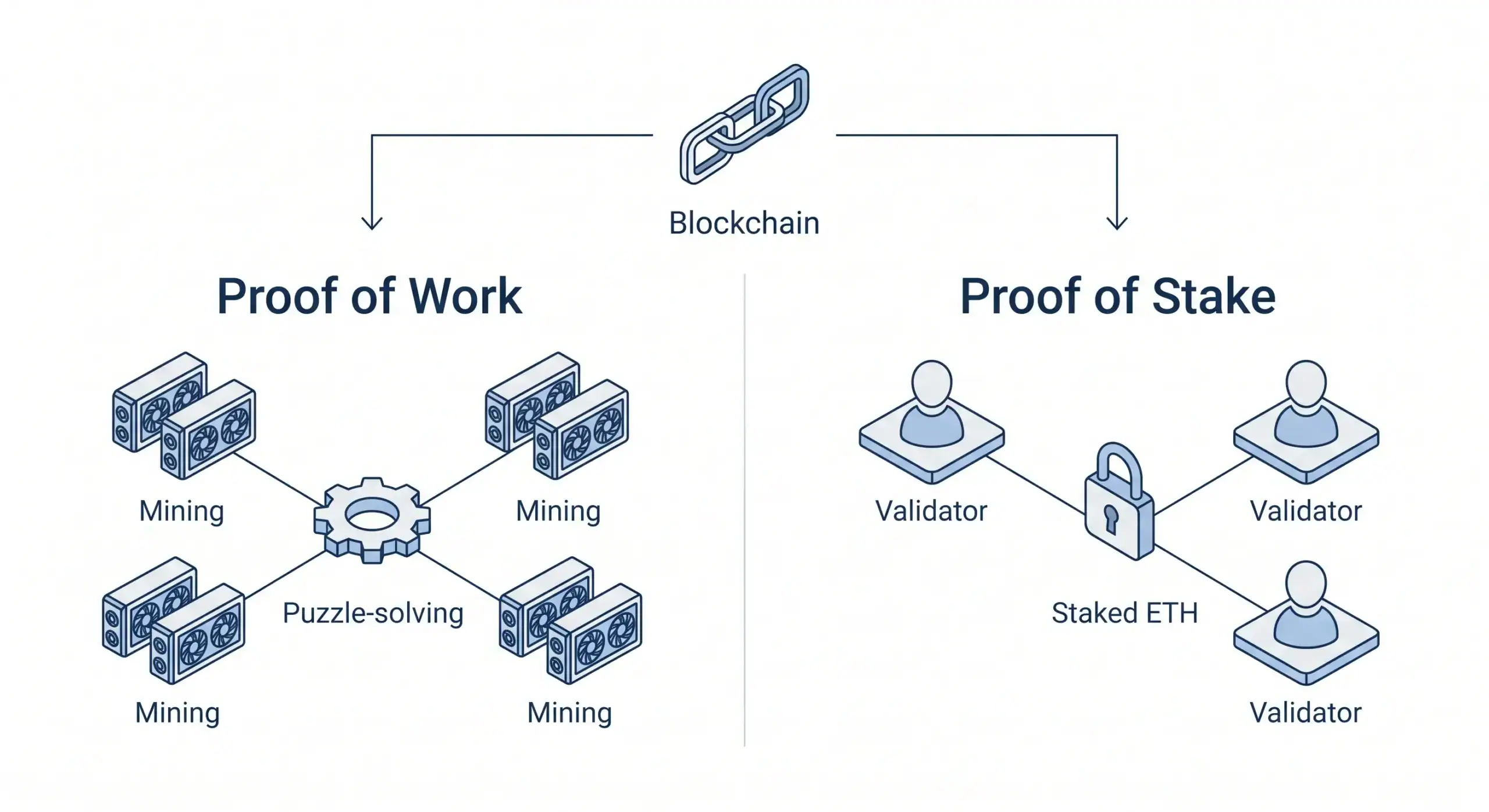
- Since the switch to Proof of Stake, network security relies on thousands of validators locking ETH instead of solving computational puzzles.
- It allows you to put the ETH you already have to work, without needing to sell it or constantly move it between platforms.
- Its less marketable side is real: there are risks of slashing and periods of blockage that should be understood before taking the first step.
If you already have ETH sitting idle, staking is the most direct way to participate in Ethereum and earn rewards. Since the network completed its transition to Proof of Stake (PoS), anyone with available ETH can contribute to the protocol's security without needing to operate specialized mining infrastructure, as was previously the case. For those who already have ETH in their user account or are planning to acquire it, understanding how this mechanism works is the first step before moving a single Ether.
This practical guide covers the essentials of Ethereum staking: what it technically entails, the prerequisites you need, the specific steps to get started, the differences between self-validating, platform staking, and liquid staking, and the risks—such as slashing and lock-up periods—you should be aware of before confirming your stake. You'll also learn how to track rewards once your ETH is participating in the network.
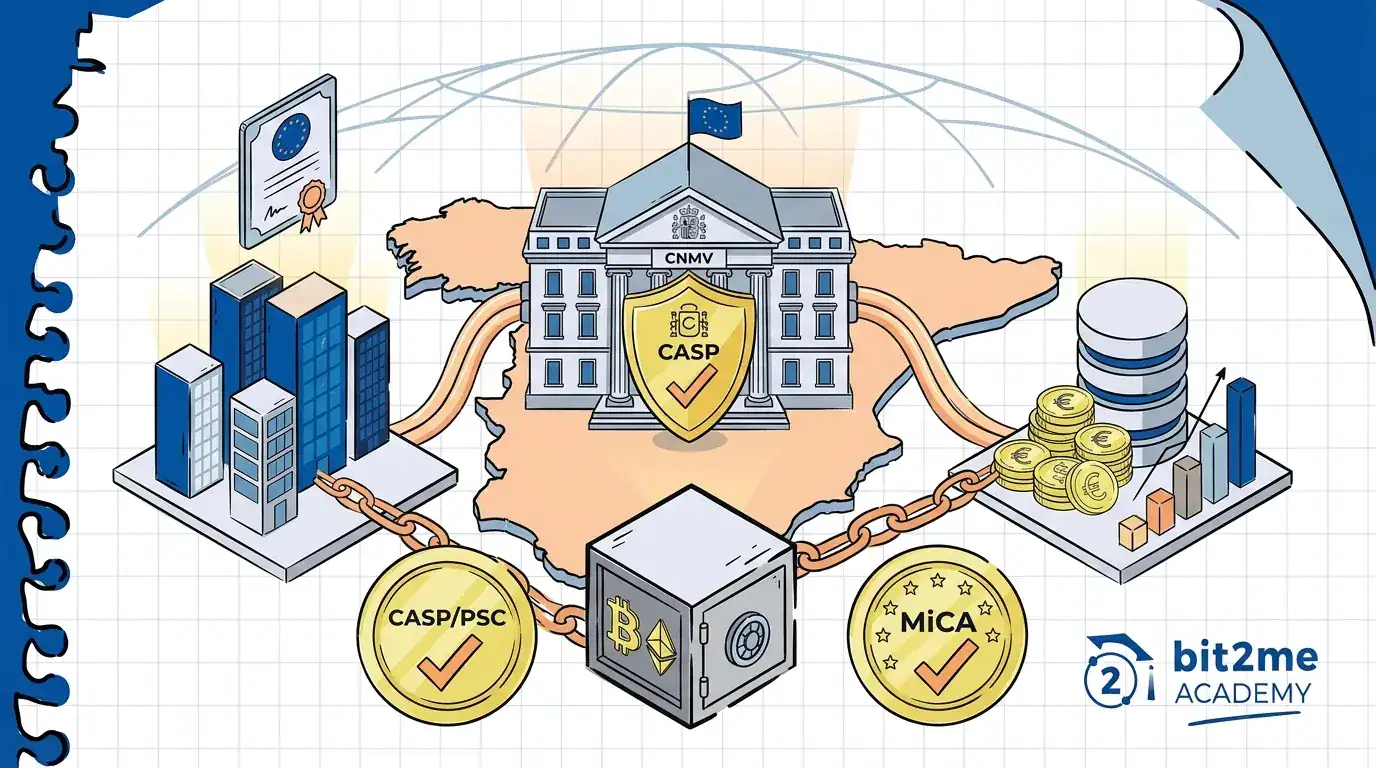
In the European Union, the MiCA (Markets in Crypto-Assets) Regulation, in force since 2024, establishes the framework applicable to crypto-asset service providers (CSPs). BITCOINFORME, PSC, SL, operating under the trade name BIT2ME, is a crypto-asset service provider authorized and regulated by the Spanish National Securities Market Commission (CNMV), in accordance with Article 59 of Regulation (EU) MiCA, which legally governs the staking services it offers to its users.
What does staking Ethereum mean after the move to Proof of Stake?
Ethereum ceased relying on mining in September 2022, when the network completed the transition known as "the Merge" and replaced Proof of Work (PoW) with Proof of Stake (PoS) as its consensus mechanism. According to Ethereum's official documentation (ethereum.org, accessed August 2026), in PoS, participants who lock ETH as collateral—the validators—are the ones who propose and confirm new blocks, rather than competing by solving calculations with specialized hardware.
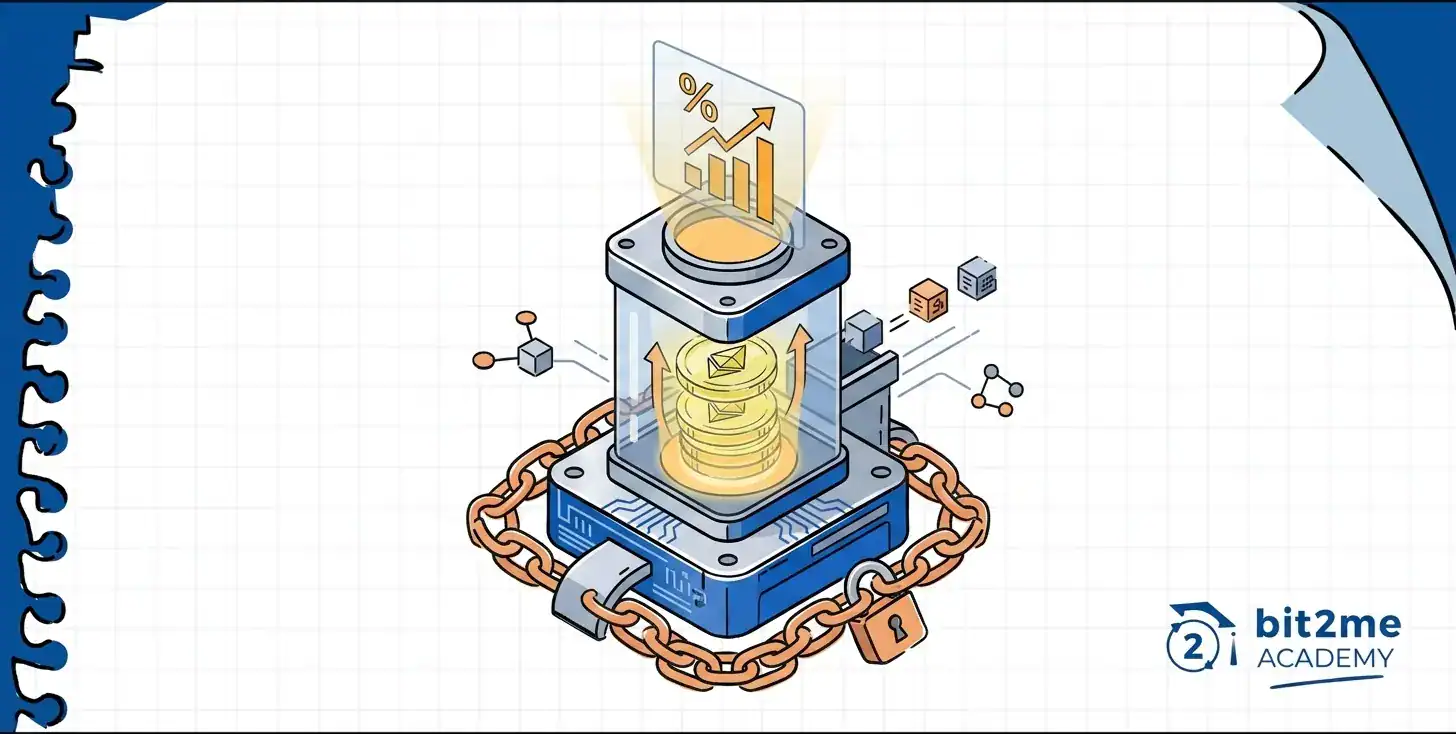
Staking, in practice, means making ETH available to the protocol so that a validator (either your own or one managed by a third party) can participate in the validation process. In exchange for this active participation, the network distributes rewards—usually expressed as an annual percentage or APY—to those who keep their ETH locked and their validator functioning correctly. The longer and the more ETH that participates correctly in the network, the greater the contribution to the overall security of Ethereum.
This design change has a direct consequence for all users: participation no longer requires purchasing mining equipment or assuming the associated electricity costs. Now, the only requirement is having ETH available and choosing an operational path suited to your profile, something we will examine in detail in the following sections.
Prerequisites before starting
Before taking the first step, it's helpful to clarify a few basic elements. This isn't an exhaustive list of technical requirements, but rather the points that determine whether you're ready to start today or if you need to resolve something first.
- Dispose of Ether (ETH) already acquired, or have decided to buy it before starting the process.
- Have a wallet or user account compatible with the chosen staking method.
- Understand that the ETH placed in staking is committed for a certain period, depending on the chosen method.
- Accept that there are operational and market risks that should be reviewed before confirming any transaction.
Once these points are addressed, the relevant decision shifts from "whether" to staking to "how" to do it, which is precisely what the following sections cover. Those who don't yet own ETH can first acquire it on an exchange platform and, once it's in their user account, calmly decide which staking method best suits their situation.
How to stake Ethereum in 4 steps?
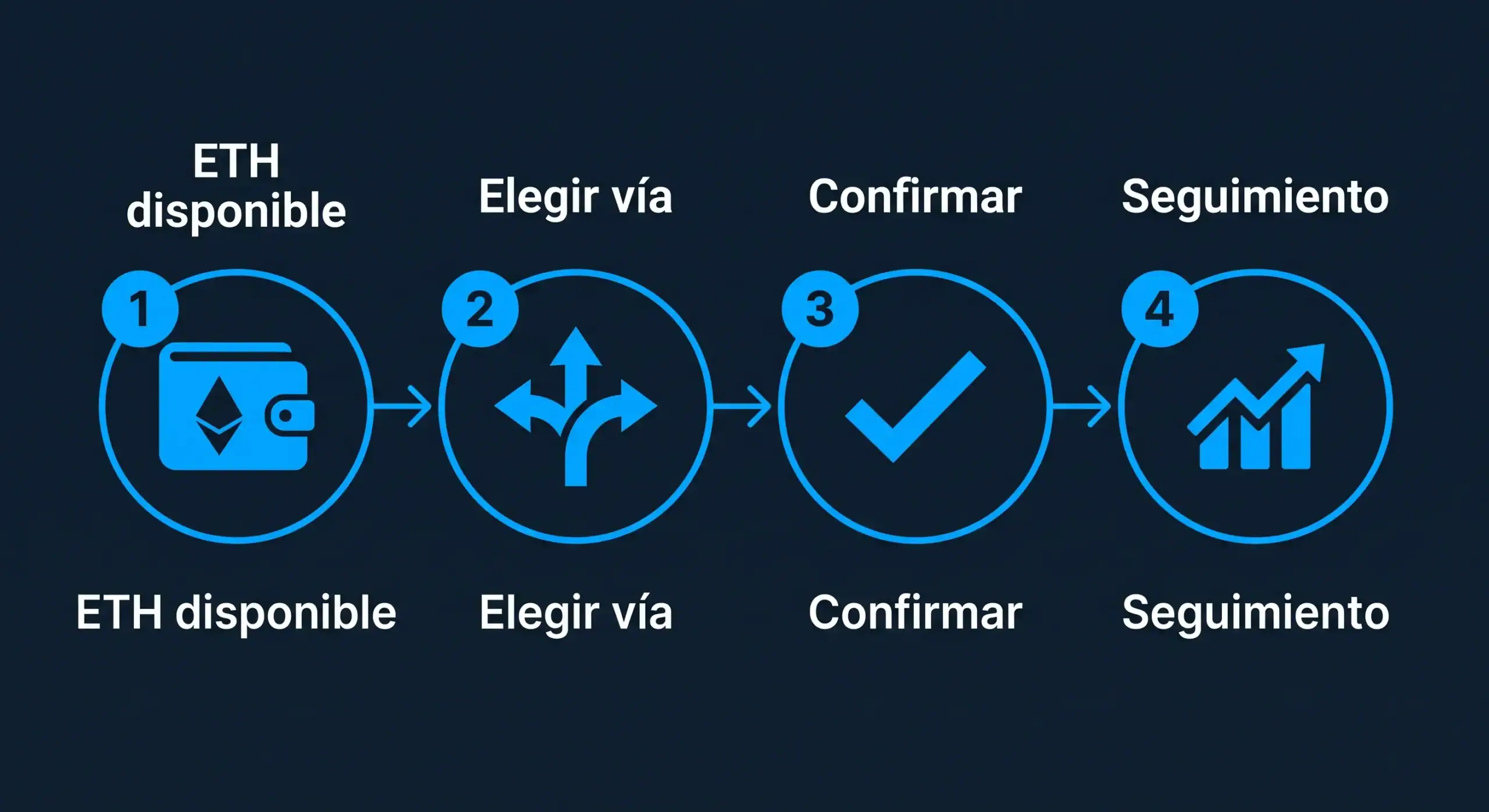
Regardless of the technical method you choose, the process always follows the same general logic. These are the four steps you should follow in order.
- Have ETH available. Acquire or hold in your wallet or user account the amount of Ether you wish to allocate to staking, taking into account that it will be committed for the duration of the operation.
- Choose the staking route. Decide between operating your own validator, staking through a platform, or using liquid staking; each option has different technical requirements, minimums, and risk levels. A very simple way to do this is using Bit2Me Earn.
- Confirm the staking. Formalize the transaction through your chosen channel, review the conditions, blocking deadlines, and associated risks, and only confirm when you understand all of those terms.
- Track rewards. Once active, it periodically monitors the status of your validator or position and the rewards generated, something we explain in more detail later in this article.
Those who prefer not to manage the technical side of a validator can start with Earn and delegate that operation to a platform, while maintaining control over when and how much ETH they allocate to staking.
 Certificate
Self-validator, platform or liquid staking: which path to choose
Not all Ethereum staking methods require the same level of technical knowledge or the same amount of available ETH. The first option is to operate your own validator: this involves running and maintaining the validation software, directly assuming any penalties for operational failures, and managing the infrastructure necessary to ensure the validator is always available. It's the most independent approach, but also the one that demands the most ongoing technical responsibility from the user.
The second option is to stake ETH through a platform, which handles the validator's technical operations on behalf of the user. This method lowers the barrier to entry because it doesn't require infrastructure knowledge or a large minimum amount of ETH, although it does involve delegating operational management to a third party. The third option, liquid staking, provides the user with a token representing their staked position, allowing for flexibility in using that token in other contexts while the original ETH remains committed to the network.
Choosing between these three paths depends on how much ETH you have available, how much technical control you want to maintain, and how much flexibility you need while your position is active. Bit2Me Academy We delve deeper into the technical, risk, and liquidity differences between these three paths in a specific guide within the Staking and Earn content pillar, so here we focus on the essentials to help you make an informed decision before moving forward.
Risks you should be aware of: slashing and blocking periods
No staking mechanism is risk-free, and Ethereum is no exception. The most specific risk of this mechanism is slashing: a financial penalty applied to a validator when it acts improperly, for example, by signing two different blocks in the same position in the chain or remaining offline for extended periods. When this occurs, the protocol automatically reduces a portion of the ETH locked by that validator, and in the most serious cases, it can force its removal from the network.
Those who operate their own validators assume this risk directly; those who stake through a platform or in liquid staking depend on the operator maintaining the infrastructure correctly configured to minimize it. Added to this is the liquidity risk: the ETH staked is committed for a specific period, and unstaking is not instantaneous, as it depends on an exit queue that varies depending on how many validators request to withdraw simultaneously. The longer this queue, the longer the wait before regaining full control over the ETH.
No provider can guarantee the complete absence of risk in staking, and any message claiming otherwise should raise suspicion. The sensible approach is to work with audited protocols and platforms, understand the timeframes before confirming the transaction, and avoid committing ETH that might be needed for immediate liquidity.
How to track your staking rewards?
Once ETH is participating in the network, the work doesn't end: it's advisable to periodically check how your position is evolving. The most direct way is to consult the dashboard of the platform or wallet you're using, where you'll usually see the ETH locked, the accumulated rewards, and the operational status of your associated validator. Those who operate their own validator can also check its status directly on a public block explorer.
The APY for staking is not a fixed number: it varies depending on the total amount of ETH staked across the entire network, the operation of the specific validator, and, in the case of platforms, the current policy of each provider. Therefore, it's advisable to check the updated figure on the relevant official channel before making any decisions, and always remember that past performance is not indicative of future results and does not guarantee equivalent rewards in the future.
Monitoring doesn't mean checking the position every minute: a periodic review—weekly or monthly, depending on the amount involved and how much attention each user wants to dedicate to it—is enough to confirm that the validator is still operating normally and that the rewards are accumulating as expected.
Current state of Ethereum staking in 2026
Staking has become the default state for a significant portion of the ETH supply since the switch to Proof of Stake in 2022. According to public estimates from network explorers such as beaconcha.in (consulted in early 2026), the percentage of ETH staked remains consistently above a quarter of the total circulating supply, a trend that has progressively solidified since the activation of PoS.
This growth has been accompanied by an increasingly wide range of access options: in addition to operating their own validator, multiple platforms and liquid staking protocols now coexist, significantly lowering the barrier to entry compared to the first months after the Merge. Even so, the ecosystem continues to evolve—both in terms of protocol and regulation under MiCA in the European Union—so it's advisable to periodically review the current conditions before committing ETH.

Frequently Asked Questions about Ethereum Staking



 Author